We’re currently in Poland for the festive season. Having seen the press releases about T-Mobile’s NB-IoT Open Lab and trials in Poland we brought along some of our NB-IoT gear on the off chance of being able to test T-Mobile’s offering at some point on our trials. We got far more than we bargained for! As far as I can tell there has been no press release to this effect as yet, but Miko from T-Mobile Polska took time out from his vacation to tell us that:
You can now find our NB1 service in 400 cities in Poland.
Warsawa, Radom and Łódź are OK.
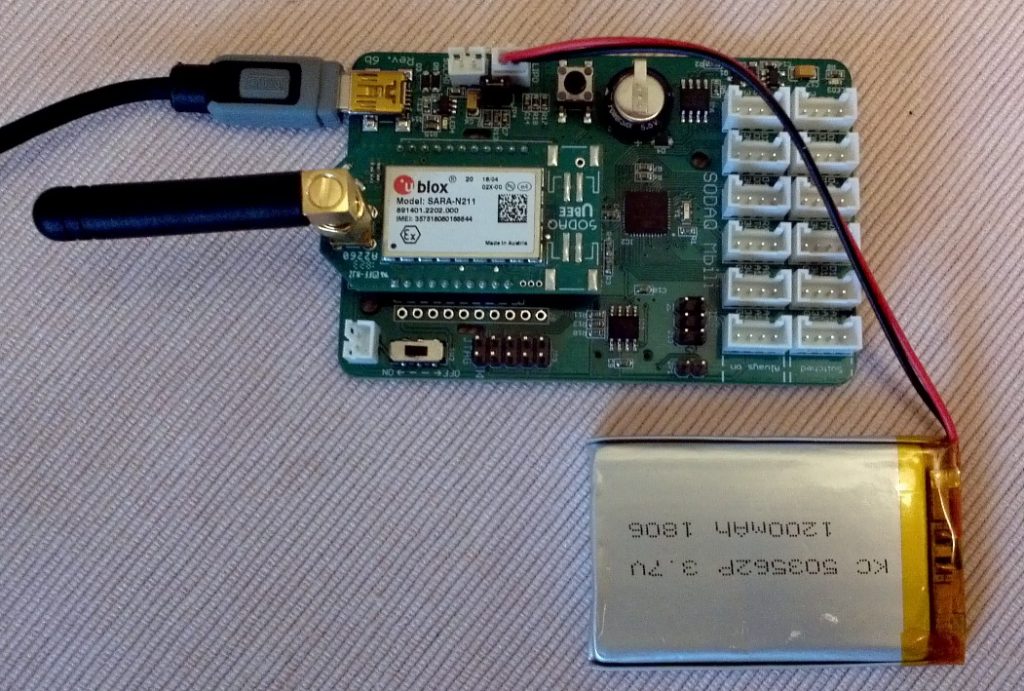
Since we’re currently based in the Bałuty area of Łódź we thought we’d conduct a little experiment, using a T-Mobile NB-IoT SIM card from the Netherlands in our SODAQ Mbili Arduino compatible board, also from the Netherlands:
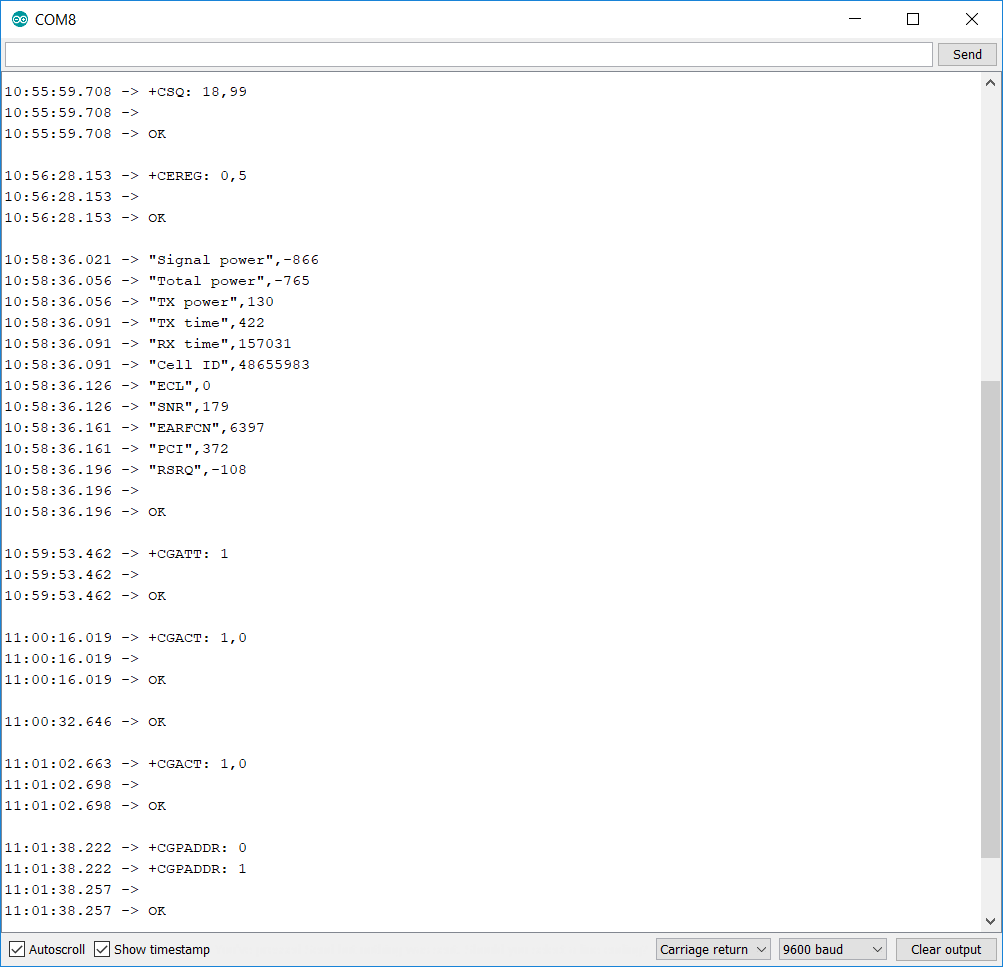
As you can hopefully see we’ve plugged in a u-blox Sara N211 NB-IoT comms module, and here is what we’ve discovered:
So near and yet so far! It looks as though we’ll have to wait for some pukka Polish T-Mobile NB-IoT SIMs to arrive in the post.
Meanwhile here’s T-Mobile’s Polish language video about their NB-IoT rollout across the globe, with a particular emphasis on Poland:
Narrowband-IoT is a breakthrough technology for solutions to the Internet of Things. It has been designed for two-way transmission of small amounts of data between devices. Watch the video and learn about specific application examples. Find out how you can reduce costs with this technology.
Our regular readers will be aware that we have been discussing our Internet of Things platform requirements with Digi International for quite some time now. At long last Digi have revealed what they see as their top 5 IoT requirements. Brad Cole, Digi’s Enterprise Software Product Manager, explains their view of such things in this newly released video:
I don’t know about you, but I quite like the sound of this bit:
It should provide a central aggregation service to which all remote gateways and devices attach, and it should do so securely with automated detection and self healing. Devices then utilise a secure integration protocol to send and retrieve data in a variety of ways.
What should you be looking for in an IoT platform? What are the top 5 “must have” requirements? First and foremost, security is key!
With all that in mind we’ve had one of Digi’s new XBee3 Cellular LTE-M/NB-IoT Global modules in our possession since before they announced it. However here in the UK LTE-M is conspicuous only by it’s absence, so we’ve been anxiously awaiting Digi’s promised “certification of Digi XBee3 Cellular NB-IoT in October 2018”. It’s still September and Digi haven’t issued another press release yet, but nevertheless we have already managed to upgrade our XBee3 module to firmware revision C. According to the accompanying release notes:
### Release Version
1140C – XBee3 Cellular LTE-M/NB-IoT Global
### Release Date
September 2018
### New Features:
NB-IoT Support
Support for European and U.S. Carriers.
Important: Conditionally approved for use on T-Mobile NB-IoT network for evaluation and development purposes. Full certification will be completed with an upcoming cellular component firmware update (SARA-R410M-03B).
Added new option 1 to CP command for network configuration.
Added new commands BM, BN to select band mask.
Added new command N# to select network preference.
For some strange reason Digi neglected to mention the “upcoming cellular component firmware update” back in August. However it does sound as though their new module is now fully certified for use on Vodafone’s NB-IoT network. Digi have also just updated their XBee3 Cellular LTE-M/NB-IoT Global module specification sheet, which now reads as follows:
OPERATING MODES (LTE-M) Transparent and API over serial, PPP over USB or serial
OPERATING MODES (NB-IoT) Transparent, API, UDP
Digi’s technical support team assure me that:
Currently the updated U-Blox code is not scheduled to be certified till around Q2 of 2019.
Better late than never I guess? They have also clarified the issues involved in updating the u-blox SARA R410M module firmware once rev 3B is eventually issued:
You will not be able to perform the firmware update via the old XBIB-U-DEV board you have. It will require the use of a new board that is still in development which will provide USB direct access to that U-Blox chip.
When the new board is released, you will have access to the USB direct pins. One will place the module in USB direct mode which also puts it in bypass mode. If you are using Linux, your Linux modem manager or other options will be able to talk directly to the U-Blox chip.
Personally I cannot wait for that glorious day, because that will allow me to tick one more of the boxes on V2G EVSE’s checklist of top IoT platform requirements. To summarise, here are the top 6 entries on our current IoT platform leaderboard:
LTE-M and NB-IoT global certifications
Security
Reliability
Scalability
Flexibility
Simplicity
This website uses cookies to improve your experience. We'll assume you're ok with this, but you can opt-out if you wish.AcceptRead More