T-Mobile Rolls Out NB-IoT Across Poland

We’re currently in Poland for the festive season. Having seen the press releases about T-Mobile’s NB-IoT Open Lab and trials in Poland we brought along some of our NB-IoT gear on the off chance of being able to test T-Mobile’s offering at some point on our trials. We got far more than we bargained for! As far as I can tell there has been no press release to this effect as yet, but Miko from T-Mobile Polska took time out from his vacation to tell us that:

You can now find our NB1 service in 400 cities in Poland.

Warsawa, Radom and Łódź are OK.

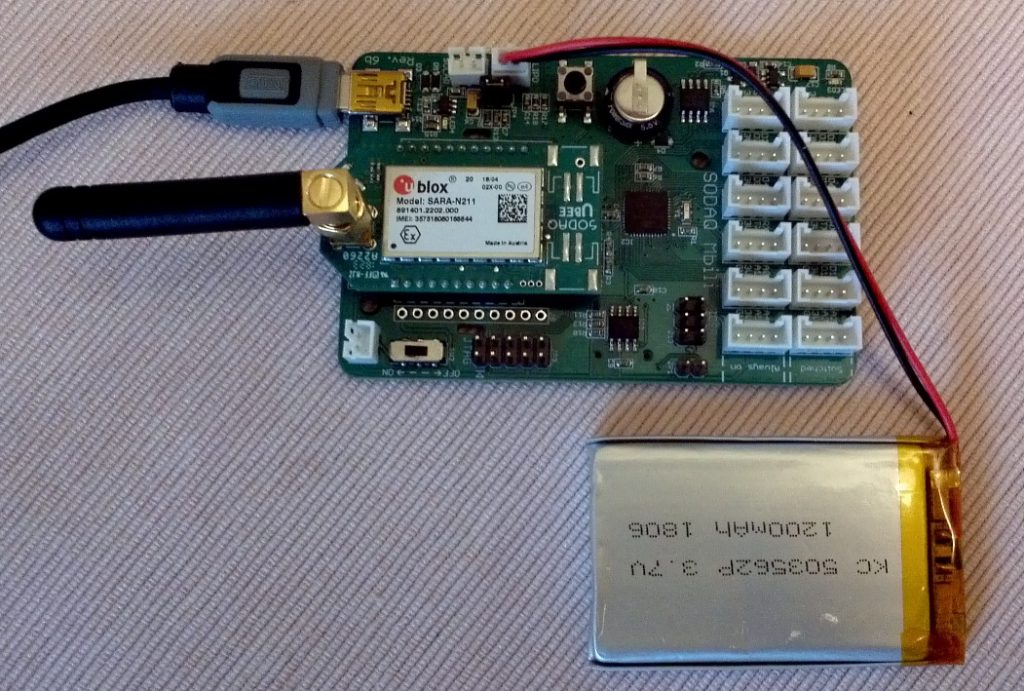
Since we’re currently based in the Bałuty area of Łódź we thought we’d conduct a little experiment, using a T-Mobile NB-IoT SIM card from the Netherlands in our SODAQ Mbili Arduino compatible board, also from the Netherlands:

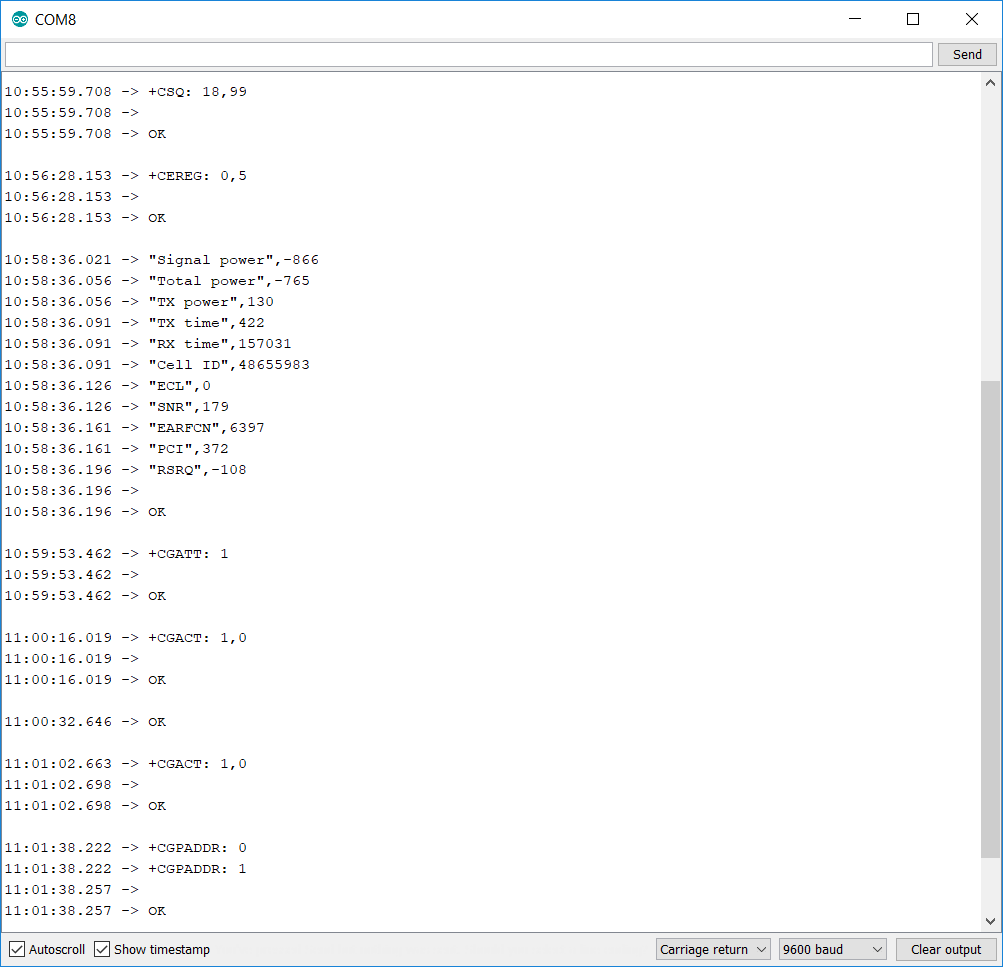
As you can hopefully see we’ve plugged in a u-blox Sara N211 NB-IoT comms module, and here is what we’ve discovered:

So near and yet so far! It looks as though we’ll have to wait for some pukka Polish T-Mobile NB-IoT SIMs to arrive in the post.

Meanwhile here’s T-Mobile’s Polish language video about their NB-IoT rollout across the globe, with a particular emphasis on Poland:

Narrowband-IoT is a breakthrough technology for solutions to the Internet of Things. It has been designed for two-way transmission of small amounts of data between devices. Watch the video and learn about specific application examples. Find out how you can reduce costs with this technology.

What Are The Top IoT Platform Requirements?

Our regular readers will be aware that we have been discussing our Internet of Things platform requirements with Digi International for quite some time now. At long last Digi have revealed what they see as their top 5 IoT requirements. Brad Cole, Digi’s Enterprise Software Product Manager, explains their view of such things in this newly released video:

I don’t know about you, but I quite like the sound of this bit:

It should provide a central aggregation service to which all remote gateways and devices attach, and it should do so securely with automated detection and self healing. Devices then utilise a secure integration protocol to send and retrieve data in a variety of ways.

What should you be looking for in an IoT platform? What are the top 5 “must have” requirements? First and foremost, security is key!

With all that in mind we’ve had one of Digi’s new XBee3 Cellular LTE-M/NB-IoT Global modules in our possession since before they announced it. However here in the UK LTE-M is conspicuous only by it’s absence, so we’ve been anxiously awaiting Digi’s promised “certification of Digi XBee3 Cellular NB-IoT in October 2018”. It’s still September and Digi haven’t issued another press release yet, but nevertheless we have already managed to upgrade our XBee3 module to firmware revision C. According to the accompanying release notes:

### Release Version

1140C – XBee3 Cellular LTE-M/NB-IoT Global

### Release Date

  • September 2018

### New Features:

  • NB-IoT Support
  • Support for European and U.S. Carriers.
  • Important: Conditionally approved for use on T-Mobile NB-IoT network for evaluation and development purposes. Full certification will be completed with an upcoming cellular component firmware update (SARA-R410M-03B).
  • Added new option 1 to CP command for network configuration.
  • Added new commands BM, BN to select band mask.
  • Added new command N# to select network preference.

For some strange reason Digi neglected to mention the “upcoming cellular component firmware update” back in August. However it does sound as though their new module is now fully certified for use on Vodafone’s NB-IoT network. Digi have also just updated their XBee3 Cellular LTE-M/NB-IoT Global module specification sheet, which now reads as follows:

  • OPERATING MODES (LTE-M) Transparent and API over serial, PPP over USB or serial
  • OPERATING MODES (NB-IoT) Transparent, API, UDP

Digi’s technical support team assure me that:

Currently the updated U-Blox code is not scheduled to be certified till around Q2 of 2019.

Better late than never I guess? They have also clarified the issues involved in updating the u-blox SARA R410M module firmware once rev 3B is eventually issued:

You will not be able to perform the firmware update via the old XBIB-U-DEV board you have. It will require the use of a new board that is still in development which will provide USB direct access to that U-Blox chip.

When the new board is released, you will have access to the USB direct pins. One will place the module in USB direct mode which also puts it in bypass mode. If you are using Linux, your Linux modem manager or other options will be able to talk directly to the U-Blox chip.

Personally I cannot wait for that glorious day, because that will allow me to tick one more of the boxes on V2G EVSE’s checklist of top IoT platform requirements. To summarise, here are the top 6 entries on our current IoT platform leaderboard:

  1. LTE-M and NB-IoT global certifications
  2. Security
  3. Reliability
  4. Scalability
  5. Flexibility
  6. Simplicity

V2G EVSE Announce Digi LTE-M Module

Further to the announcement earlier this week of the seed funding from the United Kingdom’s Department for Transport for our “Vehicle to grid controller with modular communications” project we have another exciting announcement to make this afternoon.

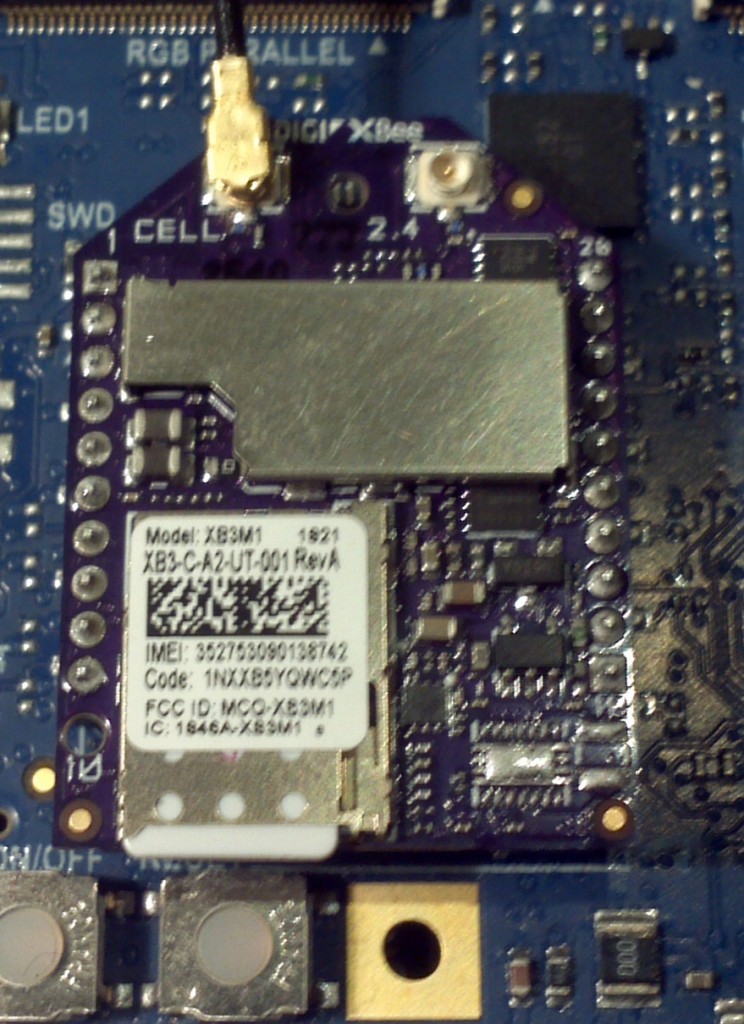
First of all please feel free to take a close look at the module that provides our controller with its LTE-M functionality. Note that it is in single antenna mode in the picture, but supports a second antenna if necessary:

V2G-EVSE-Digi-LTE-M

Secondly also bear in mind that, as an eagle eyed reader from Cambridge spotted earlier this week, the module shown above is mounted in what we prefer to refer to as the “V2G EVSE V2x controller with modular communications”.

Next we invite you to read yesterday’s press release from Digi International® headlined “Digi XBee3 Cellular LTE-M Smart Modem and Development Kits Now Available“:

MINNETONKA, Minn., Aug. 8, 2018 – Digi International®, (NASDAQ: DGII, www.digi.com), a leading global provider of Internet of Things (IoT) connectivity products and services, today announced the immediate availability of the Digi® XBee3™ Cellular LTE-M development kits, featuring Digi’s next-generation smart cellular modem.

This LTE-M certification, to be followed by the certification of Digi XBee3 Cellular NB-IoT in October 2018, allows Digi to bring one of the first LPWAN, software-defined technology-agile modems capable of offering Cat-M or NB-IoT on a single, compact footprint. Designed to be customer-configurable, developers can easily standardize and futureproof their IoT designs by simply changing modems and SIMs to leverage different wireless protocols without having to redesign hardware for different regions or applications.

Ushering in a much more simplified way of testing designs and incorporating cellular connectivity into wireless solutions, the new Digi XBee3 Cellular LTE-M smart modem is integrated into the development kit via a 20-pin Digi XBee socket, ultimately allowing for solution connectivity via millions of sockets already deployed around the globe. The module can also be easily configured and controlled from a centralized platform such as the Digi Remote Manager®.

Digi International is an Amazon Web Services (AWS) Advanced Technology Partner in the AWS Partner Network (APN), and the Digi XBee3 Cellular LTE-M is a smart cellular modem supported by AWS IoT Core. With built-in Digi TrustFence® security, the module’s identity and data privacy features use more than 175 controls to protect against new and evolving cyber threats. It also provides the tools to secure connected devices, including data in motion with TLS 1.2 encryption and bi-directional authentication – required for AWS IoT connectivity.

You may well wish to read the Digi press release in full, and I can reveal that we didn’t make use of Digi’s development kit when constructing our controller. However I’m afraid we’ll have to leave you to speculate for a while about how the V2G EVSE V2x controller delivers its NB-IoT functionality.

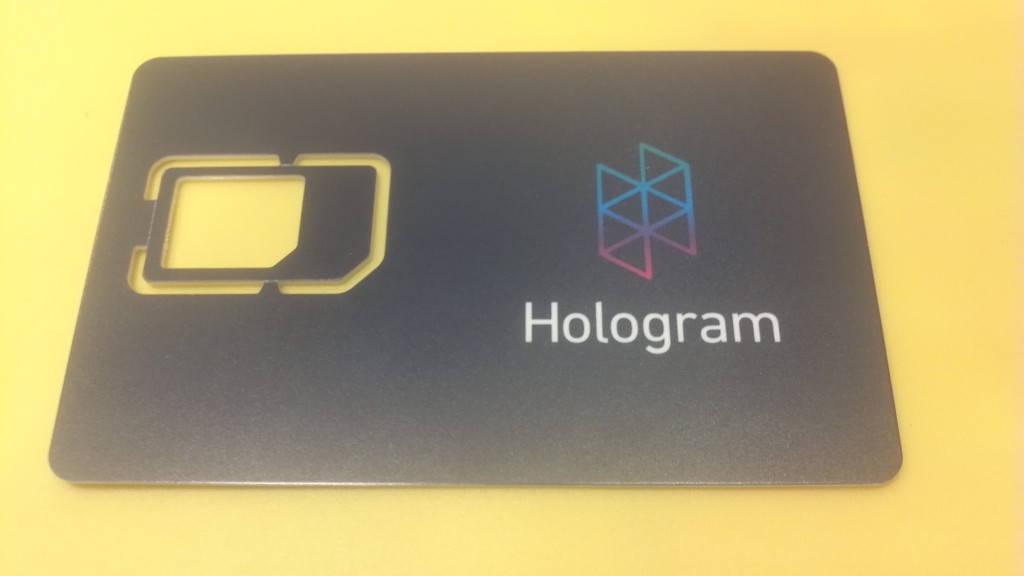
If you happen to have noticed that we’re based in the UK you may also be speculating about the SIM card plugged into the Digi LTE-M module shown above? If so we can put you out of your misery on that front at least. We paid the carriage across the pond and received this from Hologram in return:

Hologram-SIM

“A single SIM for all of Earth”!

We haven’t tested that claim of course, but it certainly works for us here in sunny South West England

Department for Transport Invests in V2G EVSE

This morning the United Kingdom’s Department for Transport issued a press release which mentions us! It also mentions what is hopefully some very good news for other Great British small businesses too:

The Department for Transport (DfT) has today (6 August 2018) set out plans to level the playing field for small businesses bidding for government contracts.

In its SME Action Plan, the DfT has committed to directing a third of its procurement spending towards small and medium-sized enterprises by 2022.

As part of this pledge, the department has also awarded £700,000 in Transport Technology Research Innovation Grants (T-TRIG) to support innovative transport projects, including a universal train access ramp that would help disabled people board trains more easily across the network.

Transport minister Jo Johnson said:

Small and medium-sized businesses play a key role in this country’s economy and I am proud of our outstanding record in this area.

With this new action plan, we are leading by example by making it easier for these businesses to bid for contracts, and we will continue to support them over the coming years.

This year, out of 23 innovative transport projects given a share of £700,000, 14 were from small and medium-sized enterprises with fewer than 250 members of staff.

According to the Department for Transport’s aforementioned SME Action Plan:

This action plan outlines how the Department for Transport (DfT) will meet the Government’s aspiration of ensuring that 33% of all procurement spend will be with small and medium enterprises (SMEs) by the end of this Parliament, either directly or indirectly through the supply chain.

and here’s how the implementation of that plan is progressing:
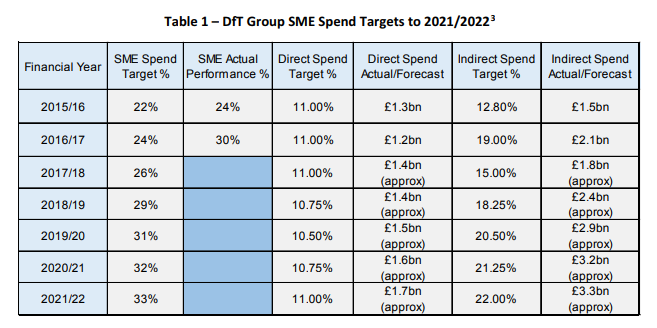
2018-08-06_DfT_SME_Targets

Here at V2G EVSE we currently have far fewer than “250 members of staff”, and this is what the DfT had to say about our “Vehicle to grid controller with modular communications” project, seed funded by the Department for Transport in response to our “Transport Technology Research Innovation Grant Open Call” bid:

Developing a prototype for a vehicle to grid electric vehicle charging station controller, which will enable optimal charging across multiple vehicles, managing energy demand. This will include modular communications which will provide information to a central system.

We were notified about our successful bid back in March, and a lot of progress has been made since then down here in North Cornwall! Here’s how the hardware side of our proof of concept EV charging station controller looks at the moment:
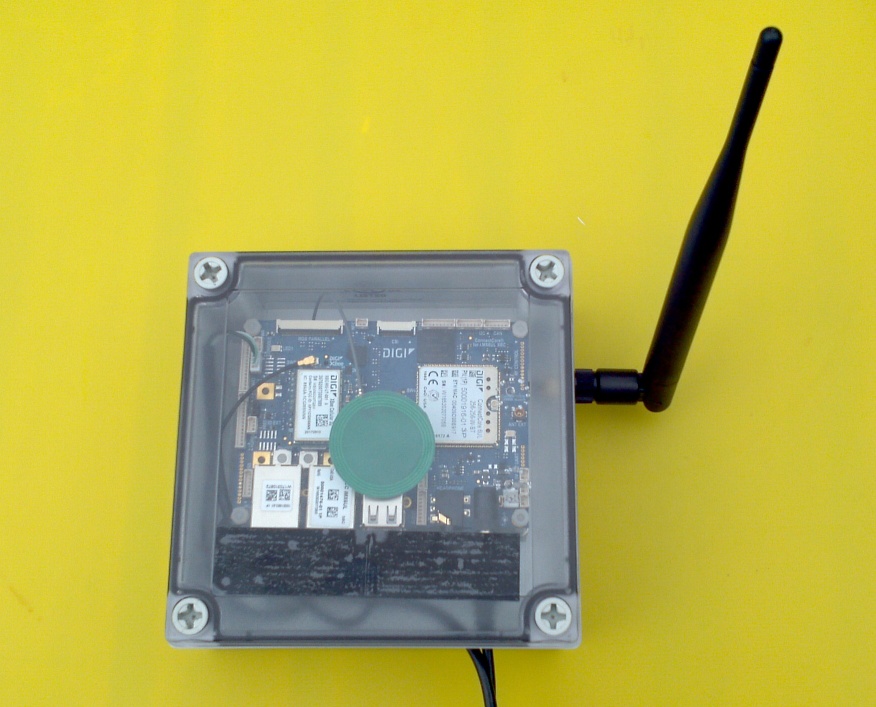
V2G-EVSE-Controller

With its assorted comms modules and their associated aerials it can currently communicate using Bluetooth “Low Energy”, WiFi, ZigBee, 2.5G, 3G, 4G, NB-IoT, LTE-M , “long range” WiFi, LoRa and Sigfox. Note first of all that not all of those technologies are suitable for the V2G use case. Note also that the V2x acronym covers a wide variety of ways of “improving the charging of electric vehicles” apart from just full blown vehicle-to-grid, including V1G (AKA “smart charging“), V2B (vehicle-to-building), V2H (vehicle-to-home) and V2I (vehicle-to-infrastructure).

From our perspective down here in sunny South West England the word “infrastructure” in the context of “electric vehicles” covers a range of Government departments. Electric vehicle charging stations definitely have one foot in the “transport” arena. In this day and age another one stands in the “energy systems” stadium as well. What’s more EV charging stations are not bipedal. Another foot is in the “digital” domain, and the fourth falls firmly in the “Future Cities” field.