V2G EVSE at the Mobile World Congress

Some members of the V2G EVSE team will be attending the Mobile World Congress 2025 event in Barcelona next week. The event itself runs from March 3rd to 5th. We will also be taking part in the associated MWC Open Innovation Challenge.

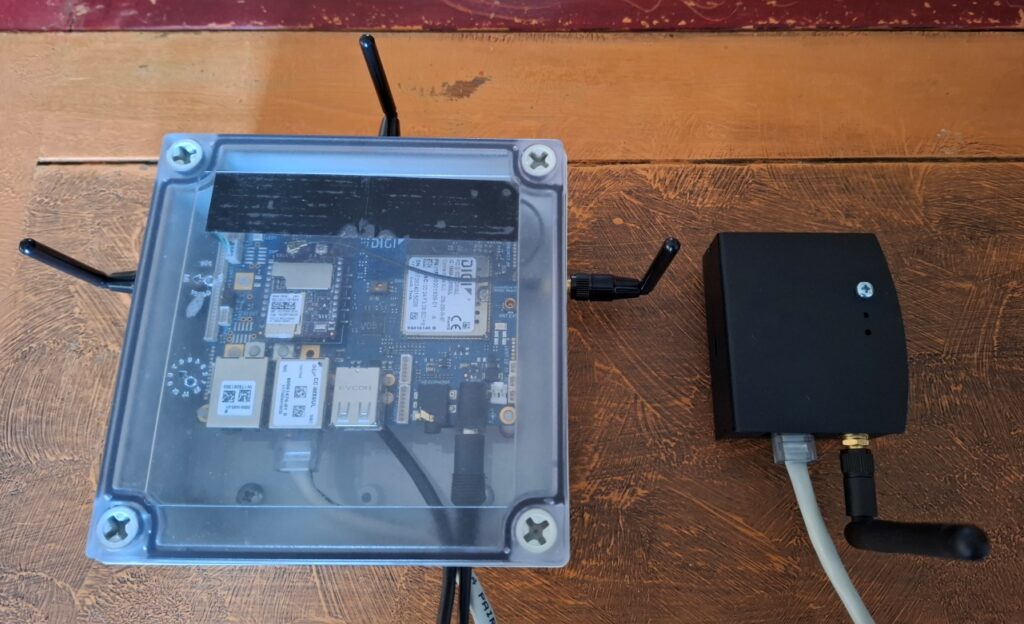
I will be carrying in my backpack the latest iterations of our range of prototype vehicle-to-grid enabled electric vehicle charging station controllers:

The one on the left is currently configured to communicate using LTE-E and LTE-A, as well as Ethernet, WiFi and Bluetooth. Assorted other options are also available. The one on the right is limited to Ethernet and WiFi.

If you would like to see a demonstration of their capabilities, please do not hesitate to get in touch:

https://mwc-open-innovation-challenge-2025.b2match.io/participants/1073

Part of the V2G EVSE “pitch” for the Open Innovation Challenge reads as follows:

IEC 63584:2024 and IEC SRD 63460:2025 have recently been published.

ISO 15118-20 Amendment 1, OCPP 2.lite, IEC 63380, IEC 63382, ISO/IEC 14543-4-303 etc. are still in development.

To be continued…

IEC Publish OCPP 2.0.1 as International Standard IEC 63584

In a recent press release the Open Charge Alliance announced that:

On October 20th, the IEC published the approval of the Open Charge Point Protocol (OCPP) as an IEC International Standard IEC 63584! This marks a significant milestone in our mission to create a smarter, more sustainable, and safer charging infrastructure, and OCA is honoured by the support of the national committees involved.  

Over the past three months, National Committees have been rigorously evaluating OCPP2.0.1ed3 to determine if OCPP could be adopted as an International Standard. With the approval from the National Committees, OCPP2.0.1ed3 will soon be published as IEC 63584.

Lonneke Driessen, CEO of OCA: “We are incredibly proud that the IEC experts have recognized OCPP within the international standards framework. This accomplishment responds to a long-standing demand to formalize OCPP, and we look forward to further collaboration with IEC experts to accelerate the development of OCPP.”

IEC 63584 will be available on the IEC website in the coming weeks.

OCPP 2.0.1 Released

We have been waiting a long time for this announcement from the Open Charge Alliance:

The full and official version of OCPP 2.0.1 is released and open to the public. OCPP 2.0.1 replaces OCPP 2.0 and features several bug fixes and improvements based on experiences in the field. As some of these improvements are on message level, the version number of OCPP has been increased to 2.0.1.

OCPP 2.0.1 incorporates improvements for things found in the first implementations of OCPP 2.0 during our Plugfests and in the field. Improvements have been made in the area of Security, ISO 15118, Smart Charging and the extensibility of OCPP. A better explanation of the Device Model has been added as well as several other improvements. No new functionality is added to this release.

However it appears as though the wait has been largely in vain from our particular perspective, since the announcement makes no mention of “smart discharging”,  more popularly referred to as V2G.

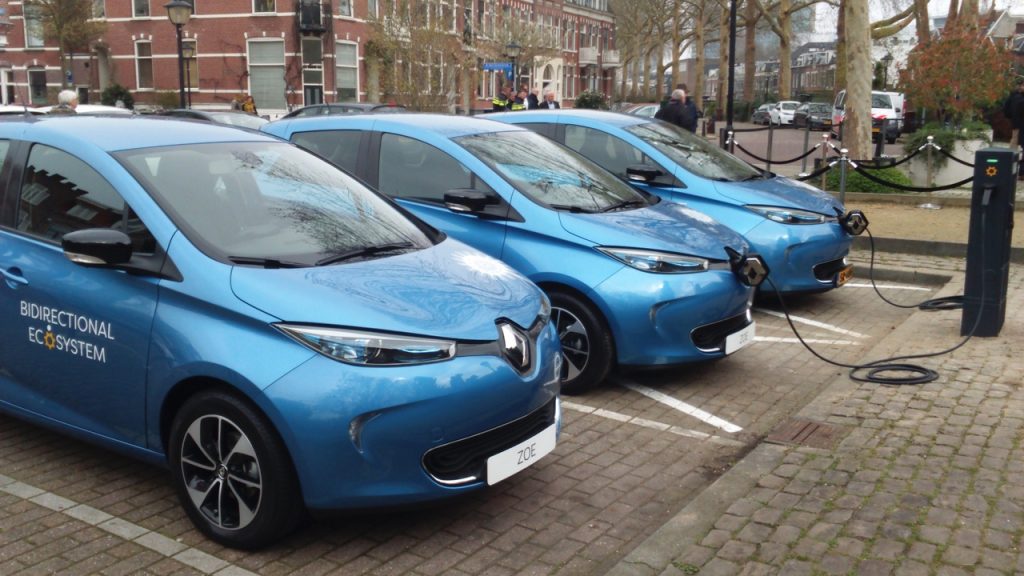
These Renault ZOE’s, pictured in Utrecht last year, do support vehicle-to-grid operation and the ISO 15118 protocol between the charging station and EV. However that is achieved by using non-standard extensions to OCPP 1.6:

The OCA have made another announcement recently as well. Here it is:

The Open Charge Alliance (OCA) has noticed that there is an increasing interest in the activities of the alliance and that companies are eager to take the next step with OCPP. Although we cannot meet face-to-face due to the worldwide COVID-19 virus, the OCA wants to share knowledge and help everyone with their implementations and innovative ideas. Therefore we are happy to announce that we will be organizing a short series of webinars about OCA’s activities parallel to the Online OCPP 2.0.1 Plugfest on April 20th and 21st.

These webinars are free and open to everyone. You don’t have to be a member of the Open Charge Alliance or have in depth knowledge about the topics.

I’ve already signed up for the “OCPP 2.0.1 tutorial” option. The other available topics are:

  • What is the Open Charge Alliance?
  • OCPP 1.6 certification program.
  • OCPP 1.6 Compliance Testing Tool.

You can get your own copy of the OCPP 2.0.1 specification via the download section of the OCA website.

AC Vehicle-to-Grid Technology Arrives in the United Kingdom

Here is the moment that Robin Berg of “We Drive Solar” announced to Robert Llewellyn and the huge crowd attending the V2G panel session at Fully Charged Live 2109 that the first ISO 15118 compliant AC V2G charging station had already arrived in Great Britain:

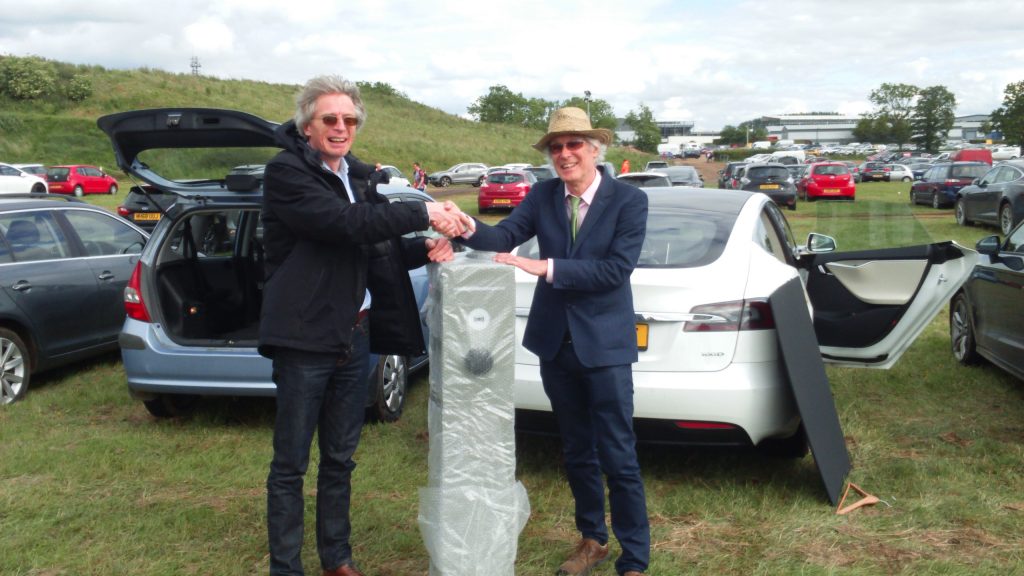
A little later Robin and I exchanged a ceremonial handshake in the muddy field that passes for a car park at the Silverstone Circuit in Northamptonshire:

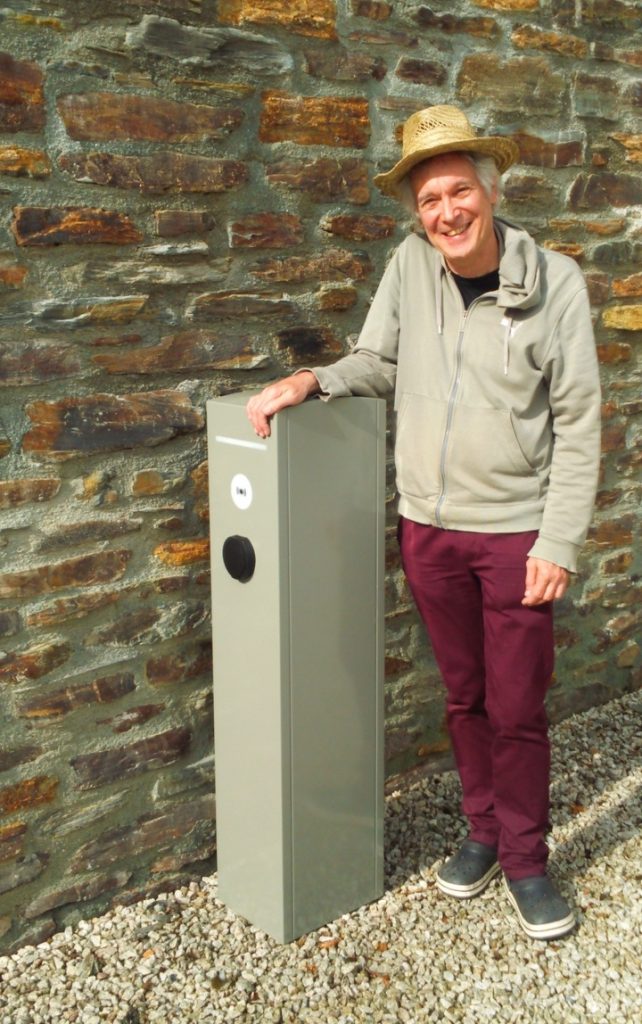
Having transferred the charging station from the back of Robin’s Tesla Model S into the rear of our humble Honda Jazz, it has now made its way safely to the courtyard here at V2G Towers in (currently!) sunny SilicInny Valley near Camelford in North Cornwall:

The next step is to provide it with some power!

Open Charge Alliance Enhances OCPP 1.6 Security

The Open Charge Alliance announced today that they have published a new security white paper. According to the news release:

Secure communication and operation is a critical aspect of Electric Vehicle Charging Infrastructure. In the latest release of OCPP version 2.0 security features such as secure connection setup, security events/logging and secure firmware update, have been added to the specification. For OCPP 1.6 however, the security measures have up until now been designed by individual implementers of OCPP. To further assist the industry the Open Charge Alliance now publishes a white paper to describe a standard way to address security using OCPP 1.6-J. Security requirements are included, on security measures for both Charge Point and Central System, to help developers build a secure OCPP implementation.

This white paper contains the following security enhancements:

  • Secure connection setup
  • Security events/logging
  • Secure firmware update

The OCPP 1.6 Security Whitepaper is also added to the OCPP 1.6 zip file that can be found on the download page of the OCA website.

I’m travelling at the moment, and haven’t had a chance to look through the document in detail. However it certainly sounds as though the OCA has ported the new security features in Open Charge Point Protocol 2.0 back into version 1.6. They are perhaps long overdue, since only a few days ago Kaspersky Lab revealed that “electric vehicle chargers supplied by a major vendor carry vulnerabilities that can be exploited by cyber-attackers” had just been patched.

Watch this space!

EV Charging Station Administration using OCPP 1.6 with SteVe

As part of our mission to experiment with “alternative” electric vehicle charging station communications technologies we’ve been searching for open source software for the “server” end of things that supports OCPP 1.6. We’d been looking at the ChargeTime Java server from Thomas Volden when news reached us that the SteVe project from the Rheinisch-Westfälische Technische Hochschule Aachen had just been updated to (mostly) support OCPP 1.6. As the ReadMe puts it:

SteVe was developed at the RWTH Aachen University and means Steckdosenverwaltung, namely socket administration in German. The aim of SteVe is to support the deployment and popularity of electric mobility, so it is easy to install and to use. SteVe provides basic functions for the administration of charge points, user data, and RFID cards for user authentication and was tested successfully in operation.

SteVe is considered as an open platform to implement, test and evaluate novel ideas for electric mobility, like authentication protocols, reservation mechanisms for charge points, and business models for electric mobility. SteVe is distributed under GPL and is free to use. If you are going to deploy SteVe we are happy to see the logo on a charge point.

We eagerly cloned SteVe from GitHub and carefully followed the instructions. Working from the Scientific Linux command line it took a while for Maven to do its thing and then SteVe burst into life at the very first time of asking!
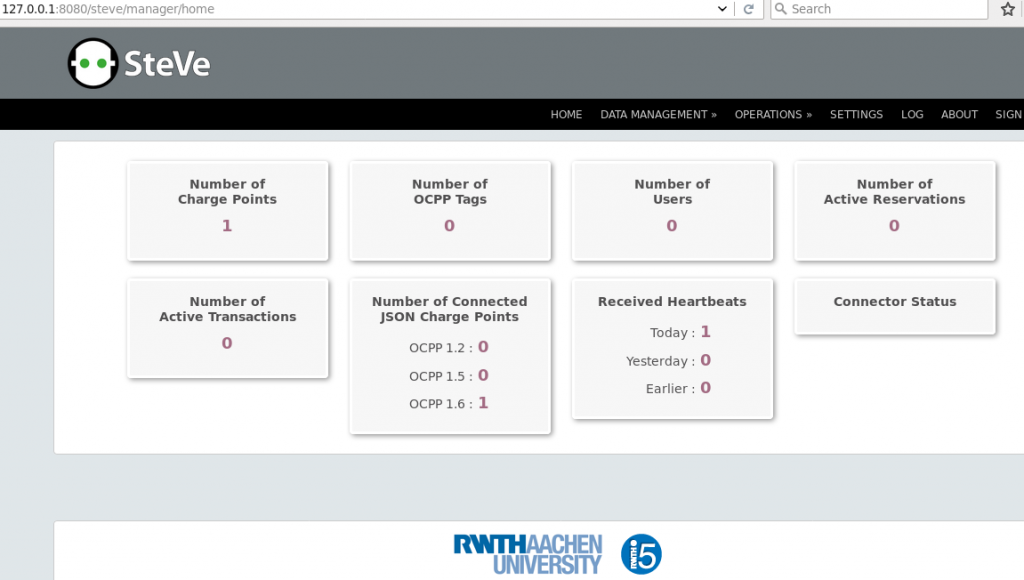
SteVeStartup

Next we tried SteVe on our trusty Raspberry Pi 3B. Whilst we have previously successfully used MySQL on a RasPi on this occasion it seemed prudent to configure SteVe to use the existing database on our Linux server. Having allowed him through our firewall once again SteVe immediately burst into life without further ado.

It took slightly more work to get him working inside Eclipse. We had to set up a suitable “Maven Build” configuration:
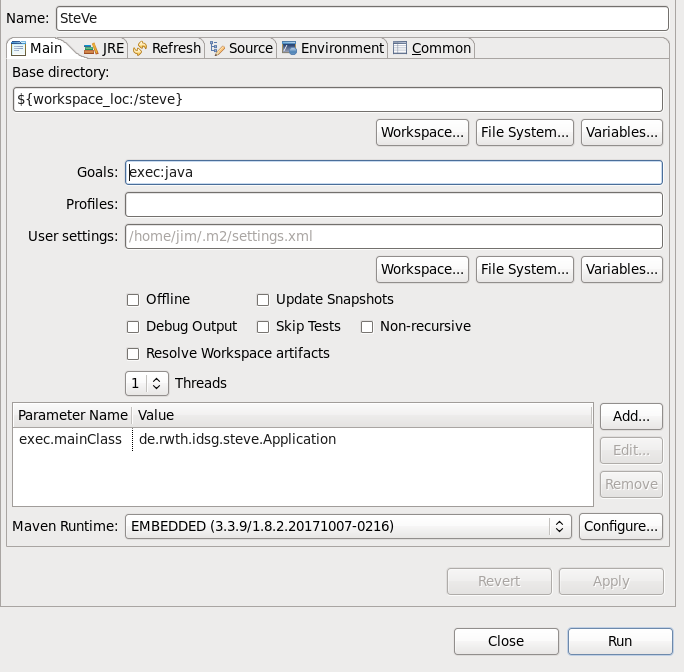
SteVeMaven

which produced this by way of console output:
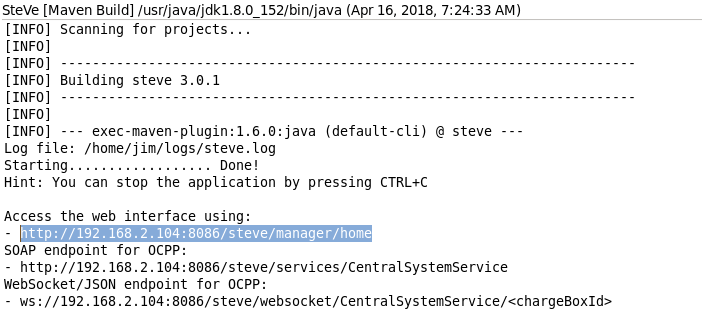
SteVeConsole

The only slight fly in the ointment at the moment is that SteVe doesn’t yet support OCPP 1.6 charging profiles:
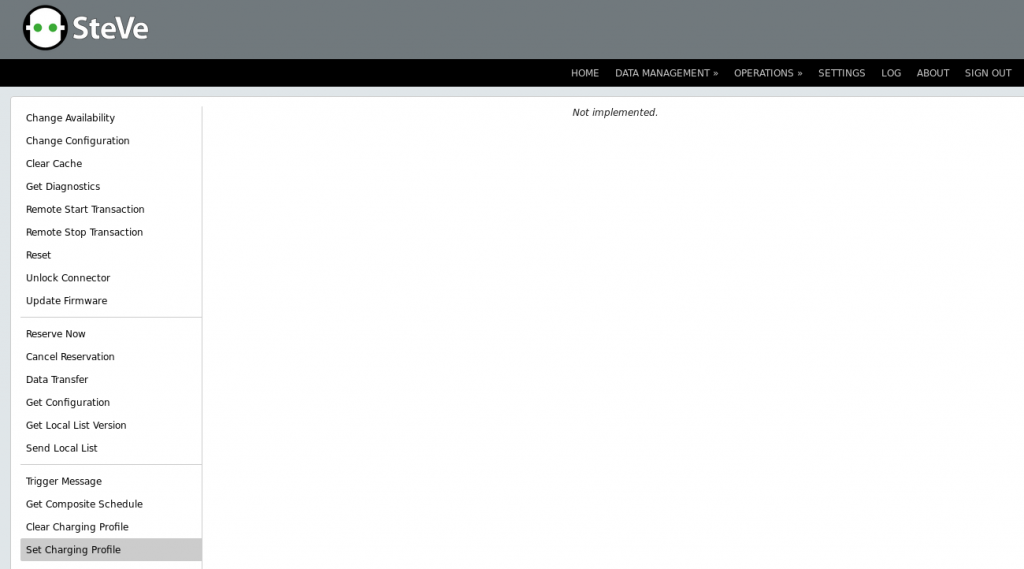
SteVeProfile

However we confidently anticipate that issue being solved in the not too distant future! As a side effect of this exercise we have also produced a forked version of the ChargeTime OCPP client, together with a modest demonstration “charging station”. Please feel free to check them out at:

https://github.com/V2G-Ltd/Java-OCA-OCPP

and

https://github.com/V2G-Ltd/OCPP-1.6-EVSE-Demo

That all works fine for us on our Azul Zulu equipped Raspberry Pi Compute Module 3.
V2G EVSE OCPP 1.6 on a Raspberry Pi Compute Module

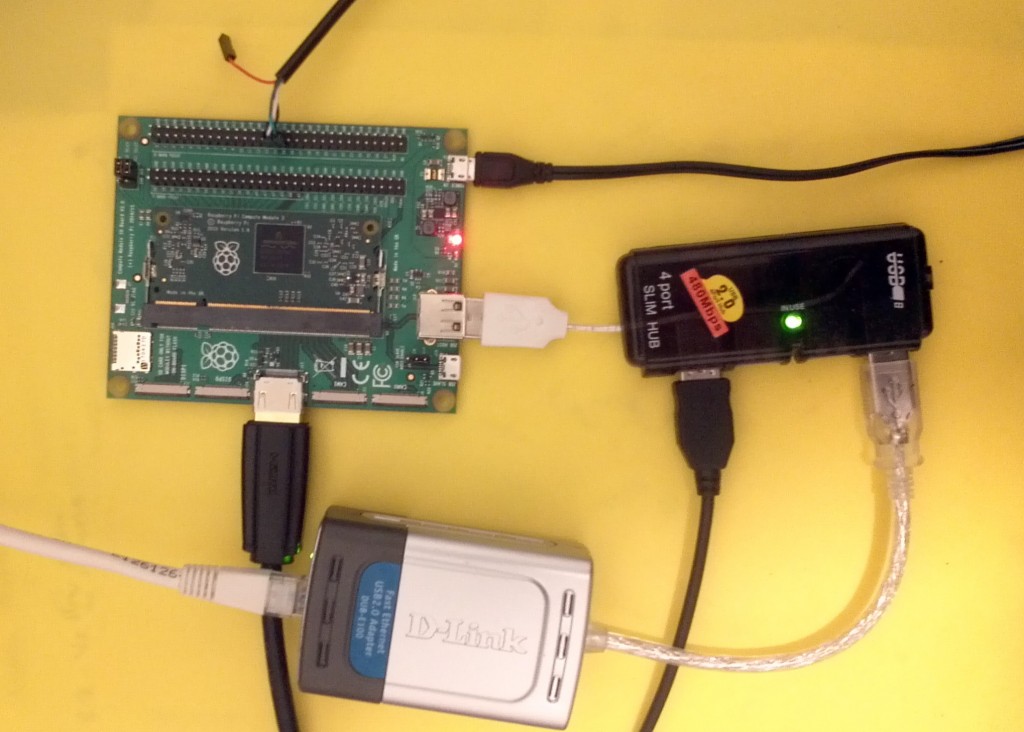
Regular readers of the blog of our parent company will be aware that we’ve been experimenting with the assorted generations of the Raspberry Pi single board computer since it was first launched here in the United Kingdom. Now we’re going into the hardware business it seemed like the perfect time to try out the “industrial version” of the venerable Pi. Here’s how our Compute Module 3 setup looks on the test bench:

Raspberry Pi Compute Module 3 on the V2G EVSE test bench

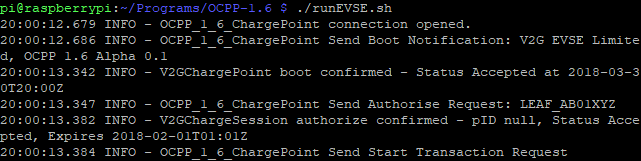
We had a few problems getting everything up and running in the first place. That explains the serial console cable you can see at the top. More on all that in due course, but first of all please take a look at what that console is displaying:

2018-03-30_2000-RasPiCM3-OCPP_1_6

A working copy of version 0.1 of the V2G EVSE OCPP 1.6 alpha firmware! As a close inspection of the output reveals, there’s a few bugs still to be ironed out, and a lot more intelligence to be baked into the CM3’s electronic brain.

However our first technical milestone has now been passed successfully, so now you may wish to head on over to the V2G EVSE CM3 project page to discover more about the niggling little problems we encountered persuading the CM3 to run Java, and how we got around them…..