Tremail – 26 October 2018
For immediate release
- V2G EVSE secures OLEV funding to assess the feasibility of combining their V2x ready smart EV charging station controller with the Urban Electric UEone pop-up charger
- ISOSEC (Inconspicuous Smart On-Street EV Charging) is a £114,000 project with Urban Electric Ltd, Plymouth City Council, Energeo Ltd, Duku and Urban Foresight Ltd
V2G EVSE Limited’s “Inconspicuous Smart On-Street EV Charging” (ISOSEC) project is part of the “Electric vehicle charging for public spaces: feasibility” competition, funded by the Office for Low Emission Vehicles (OLEV) and administered by Innovate UK.
As a first phase of an innovation funding programme worth approximately £40 million, 27 feasibility studies will analyse the application and impact of innovative technologies for EV charging.
In particular, 18 feasibility studies will focus on how a well designed, well integrated EV charging infrastructure in public spaces can help facilitate the adoption of electric vehicles (EVs) among local residents without access to home charging due to a lack of off-street parking.
9 feasibility studies will instead focus on the application of Wireless EV charging to commercial users, reducing business disruptions when charging the vehicles and therefore increasing the attractiveness of the EV proposition.
These projects will assess the feasibility of defining sustainable models intended to maximise the effectiveness and impact of infrastructure deployment. The wide variety of technologies and business models analysed in these studies will help implement a charging infrastructure that is affordable, dependable, and fair for all road users, as well as making owning an EV an attractive proposition for all.
In a subsequent phase of the funding round, the best projects will be competing for funding for implementation of real-world demonstrators.
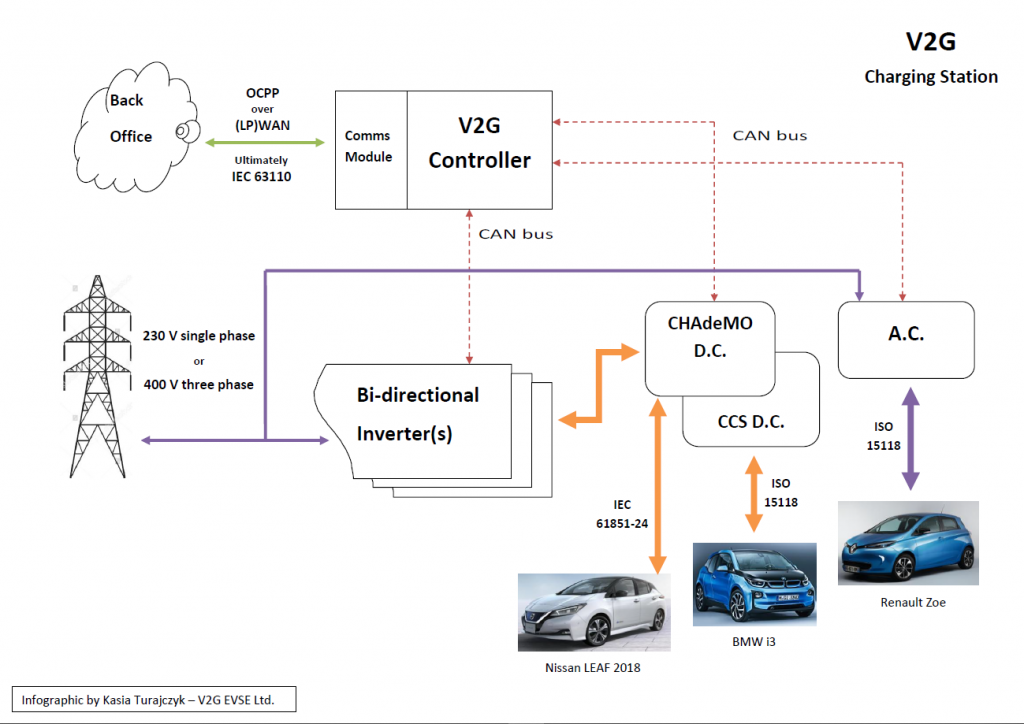
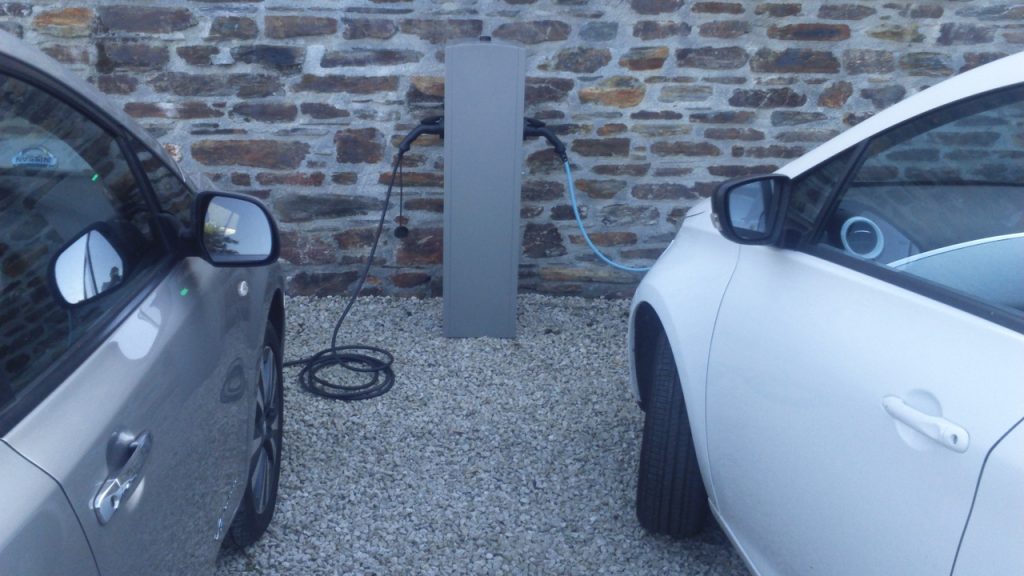
The ISOSEC project will investigate the feasibility of combining Urban Electric Limited‘s UEone pop-up (retractable) charging post with V2G EVSE’s standards-compliant V2x-ready smart charging station controller.
This system builds on the Urban Electric UEone charger being trialled with Oxford City Council, and develops it into a smart charging solution.
The project will also assess the feasibility of using big data and geographical information systems to locate EV charge posts where they can maximise their potential to deliver grid services to DNOs together with creating a Special Purpose Vehicle (SPV) funding model to:
- Enable the roll-out of charging posts at no-or-low cost to local authorities
- Generate revenue for the local authority over the lifetime of the SPV
The other collaborators on the ISOSEC project are:
Commenting on the award of the OLEV funding Olivier Freeling-Wilkinson, cofounder of Urban Electric, said that:
Urban Electric is focused on developing charging infrastructure that does not detract from the urban environment. We are excited to be collaborating with our consortium partners to explore the feasibility of developing the UEone pop-up charger as a smart charging solution.
V2G EVSE’s CEO Jim Hunt added:
It was a great pleasure to work with Keith and Oli on the preparation of our bid over a comparatively short period of time. We have a great team of collaborators, and I very much look forward to working with them all on assessing the feasibility of both our innovative on street charging business model and the potential for integrating our smart charging station controller into the UEone EV charging post.
Ian Dee, CEO of energeo remarked that:
Energeo are delighted to be part of project ISOSEC, which aims to address some of the key issues around EV infrastructure roll-out in complex urban environments. We’re particularly excited to assess the role geospatial big data and analytics can play in locating charging infrastructure to maximise utilisation and support the delivery of grid services.
Dan Turner, Low Carbon City Officer for Plymouth City Council, pointed out that:
Plymouth City Council are committed to further developing EV infrastructure in both public spaces and on street charging. We are excited to be collaborating with such innovative partners to assess the feasibility of installing pop-up chargers and we hope that this work can lead to the development of an on street charging business model in order to help Plymouth become a more sustainable place to live.
Paul Blakeman, Head of Innovation at Urban Foresight, commented:
Urban Foresight is a smart cities consultancy focused on helping cities to procure innovation, manage innovation pilots and deliver smart city programmes. We are excited to be collaborating with this group of consortium partners to assess how smart charging can be implemented to support EVs in Plymouth.
** END **
About V2G EVSE
V2G EVSE Limited is a British electric vehicle charging startup based in North Cornwall. In March 2018 the company began development of a Vehicle-to-Grid controller with modular communications using seed funding provided by a Department for Transport T-TRIG grant. Jim Hunt, V2G EVSE’s CEO, sits on a number of British and international smart-grid and electric vehicle standards setting committees. The V2G EVSE controller firmware will incorporate those emerging standards as they develop.
V2G-EVSE.com. Contact: email hidden; JavaScript is required
About Urban Electric
Urban Electric Networks Ltd is a British electric vehicle charging startup formed in London in June 2017 by Olivier Freeling-Wilkinson and Keith Johnston in the belief that EV charging infrastructure should impact positively on urban streetscapes. Voted Top 30 European Cleantech Start-up 2018 by Climate-KIC, the EU’s climate innovation agency.
urbanelectric.london. Contact: email hidden; JavaScript is required
About Energeo
Energeo utilise geospatial Big Data, Open Data, and Machine Learning to create unique insights into existing energy performance and future potential for renewable and sustainable energy. The company is currently using those techniques to pilot methods to identify the optimum location for electric vehicle charging infrastructure.
energeo.co.uk. Contact: email hidden; JavaScript is required
Plymouth City Council
plymouth.gov.uk. Contact: email hidden; JavaScript is required
About Duku (Albright Product Design)
Duku is a Product Design consultancy that provide help in taking an idea through to production including; prototyping, intellectual property and manufacturing support. Duku are currently working with Urban Electric on projects supported by Innovate UK to develop the UK’s EV charging infrastructure.
Duku.co.uk. Contact: email hidden; JavaScript is required
About Urban Foresight
Urban Foresight® was established in 2011 as the world’s first dedicated smart city consultancy. We are a mission driven business that thinks deeply about the opportunities to transform services and solve societal challenges.
Our multi-disciplinary team works across different sectors and is skilled at translating ideas into action.
We write award winning reports, provide evidence-based insights and deliver investment-ready strategies.
urbanforesight.org. Contact: email hidden; JavaScript is required