OCPP 2.0.1 Released

We have been waiting a long time for this announcement from the Open Charge Alliance:

The full and official version of OCPP 2.0.1 is released and open to the public. OCPP 2.0.1 replaces OCPP 2.0 and features several bug fixes and improvements based on experiences in the field. As some of these improvements are on message level, the version number of OCPP has been increased to 2.0.1.

OCPP 2.0.1 incorporates improvements for things found in the first implementations of OCPP 2.0 during our Plugfests and in the field. Improvements have been made in the area of Security, ISO 15118, Smart Charging and the extensibility of OCPP. A better explanation of the Device Model has been added as well as several other improvements. No new functionality is added to this release.

However it appears as though the wait has been largely in vain from our particular perspective, since the announcement makes no mention of “smart discharging”,  more popularly referred to as V2G.

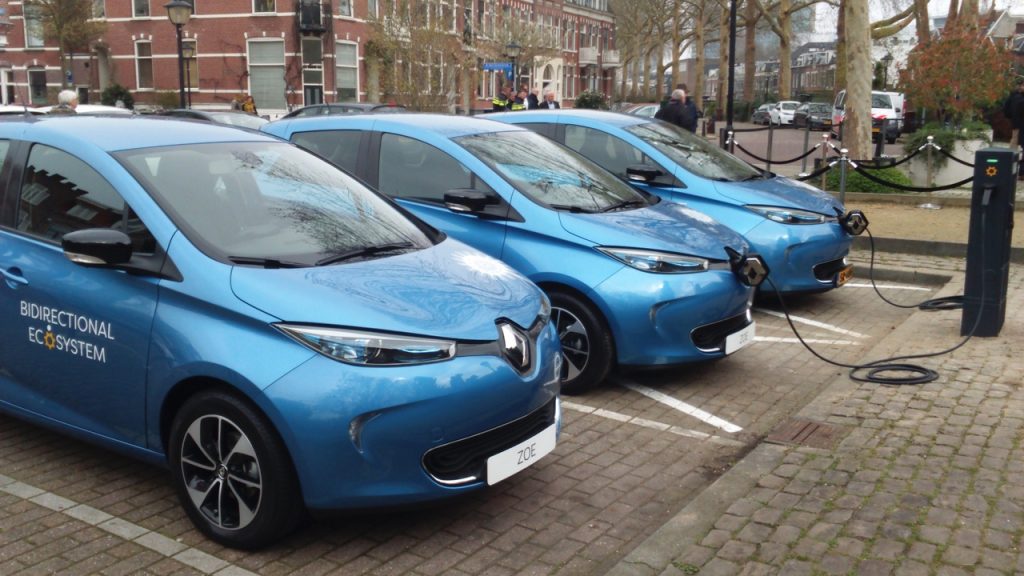
These Renault ZOE’s, pictured in Utrecht last year, do support vehicle-to-grid operation and the ISO 15118 protocol between the charging station and EV. However that is achieved by using non-standard extensions to OCPP 1.6:
The OCA have made another announcement recently as well. Here it is:

The Open Charge Alliance (OCA) has noticed that there is an increasing interest in the activities of the alliance and that companies are eager to take the next step with OCPP. Although we cannot meet face-to-face due to the worldwide COVID-19 virus, the OCA wants to share knowledge and help everyone with their implementations and innovative ideas. Therefore we are happy to announce that we will be organizing a short series of webinars about OCA’s activities parallel to the Online OCPP 2.0.1 Plugfest on April 20th and 21st.

These webinars are free and open to everyone. You don’t have to be a member of the Open Charge Alliance or have in depth knowledge about the topics.

I’ve already signed up for the “OCPP 2.0.1 tutorial” option. The other available topics are:

  • What is the Open Charge Alliance?
  • OCPP 1.6 certification program.
  • OCPP 1.6 Compliance Testing Tool.

You can get your own copy of the OCPP 2.0.1 specification via the download section of the OCA website.

The 2019 Regen V2G Forum

I was up in London yesterday to attend the Regen “Electric vehicles and electricity system forum” on “Vehicle to Grid”. Not wanting to miss all of the excitement Kasia and Jim managed to make it to the “Networking and refreshments” afterwards as well. The 10th floor offices of our hosts for the afternoon, Burges Salmon, offered a spectacular view over the City of London:

The event was introduced by Olly Frankland, Regen’s EV project manager, who opened his remarks by berating me for taking this candid snap of the panellists, plus one or two others!

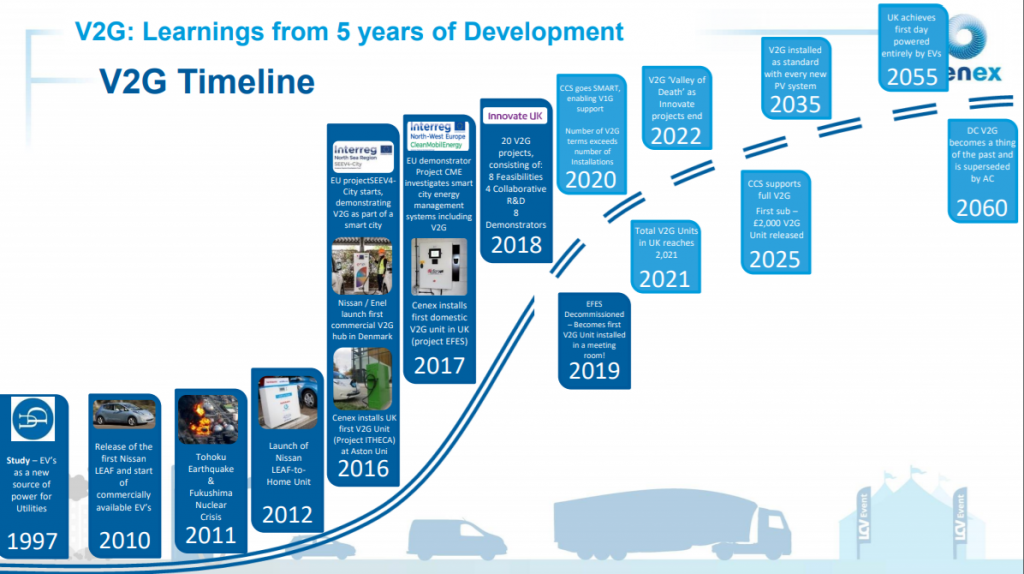
Next up at the lectern was Ross Fairley from Burges Salmon, followed by Chris Cox from Cenex, one of whose slides offered this “History of V2G”:

Note that one of Chris’s significant events is the launch of the “Nissan LEAF-to-home Unit” in 2012. I covered that news over on my V2G UK blog, and opined:

Nissan’s press release concludes by saying:

Nissan and Nichicon will continue to work together to create new value in EVs as part of the way forward toward the realization of a zero-emission society.

although they don’t forecast when such a society will be realized!

One question I had was subsequently addressed in the panel session. Olly asked the assembled experts “How many vehicle-to-grid capable EV charging stations are there in the UK at the moment, and how many will there be in 5 years time?”

The consensus amongst the panel members seemed to be:

  • 2019: 150-200
  • 2024: 5,000

A subject very dear to my heart was also discussed at some length by the panel, and what is more I wasn’t the one who posed the question! What are the pros and cons of AC versus DC vehicle-to-grid technologies, alternatively known in US English as “Vehicle Grid Integration” (VGI for short)?

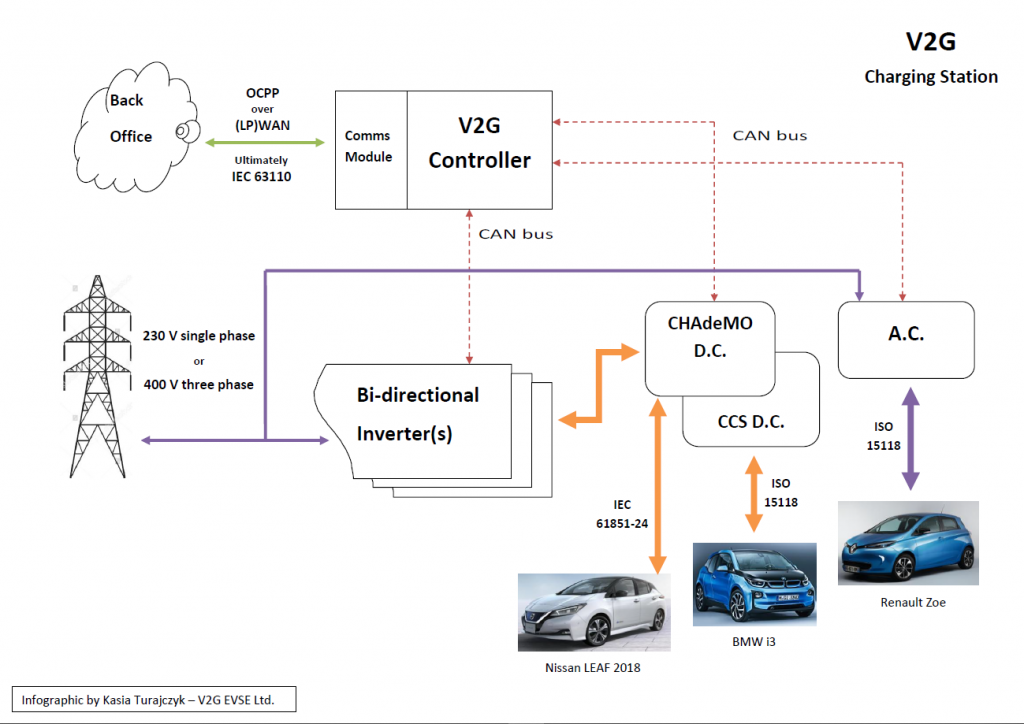
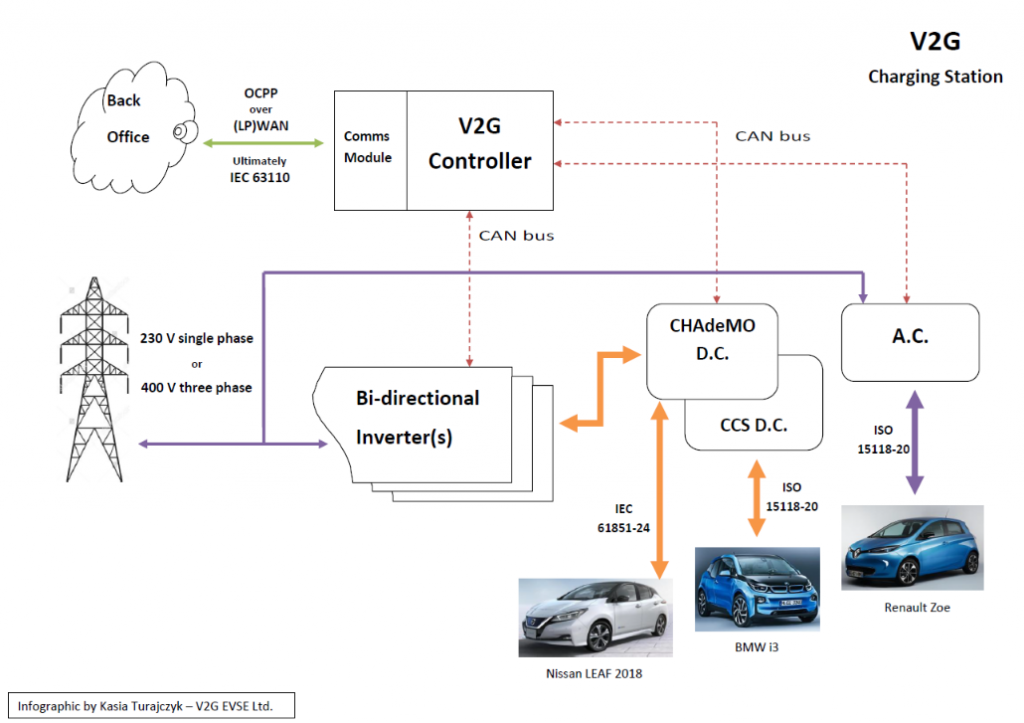
A slide that wasn’t in Olly or Chris’s deck is an infographic Kasia produced for my visit to Newcastle University last year for the International Energy Agency’s Hybrid and Electric Vehicles Technology Collaboration Programme V2x Experts’ Workshop, which I attended in my capacity as a member of assorted international “smart grid” standards setting committees. In the electric vehicle context notably ISO 15118 and IEC 63110:

Infographic: Kasia Turajczyk

That block diagram is obviously over simplified but hopefully makes it plain that an AC V2x charging station doesn’t include the bank of expensive “bi-directional inverters” required by a DC charger. Which does of course make AC charging stations much less expensive than the DC variety.

Hopefully that is if some help? The Regen V2G panel certainly seem to have been persuaded by that argument. Previously James Morgan who is a senior policy advisor in the Energy Team at the Office for Low Emission Vehicles had said he was attending the event with the aim of listening more than talking. He will have received the message that AC V2G is the future, and that in Europe at the very least, DC V2G via CHAdeMO is history.

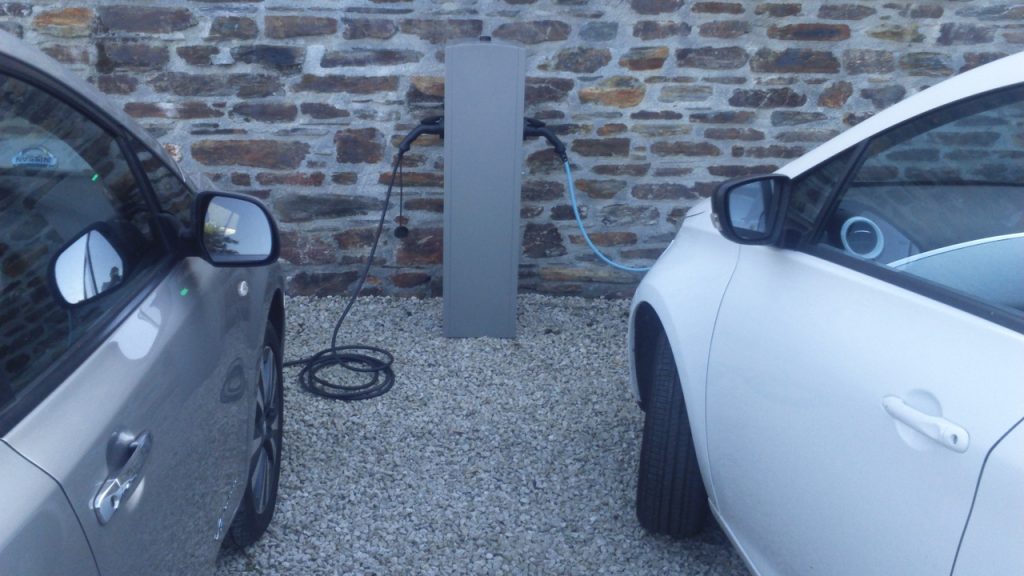
In such circumstances I felt it was my loyal duty to HM Government to point out that (to the best of my knowledge) the UK’s first dual port bi-directional AC V2G capable charging post is installed in the V2G EVSE car park way down here in North Cornwall:

200 + 120 + 1  = ??k

For further information on our clever Cornish charging post please watch this video recording of a recent “We Drive Solar” AC V2G webinar until the bitter end:

Marc Mültin’s ISO 15118 “grid codes FAQ” that I refer to at 52:00 in the video can be found over on LinkedIn.

AC Vehicle-to-Grid Technology Arrives in the United Kingdom

Here is the moment that Robin Berg of “We Drive Solar” announced to Robert Llewellyn and the huge crowd attending the V2G panel session at Fully Charged Live 2109 that the first ISO 15118 compliant AC V2G charging station had already arrived in Great Britain:

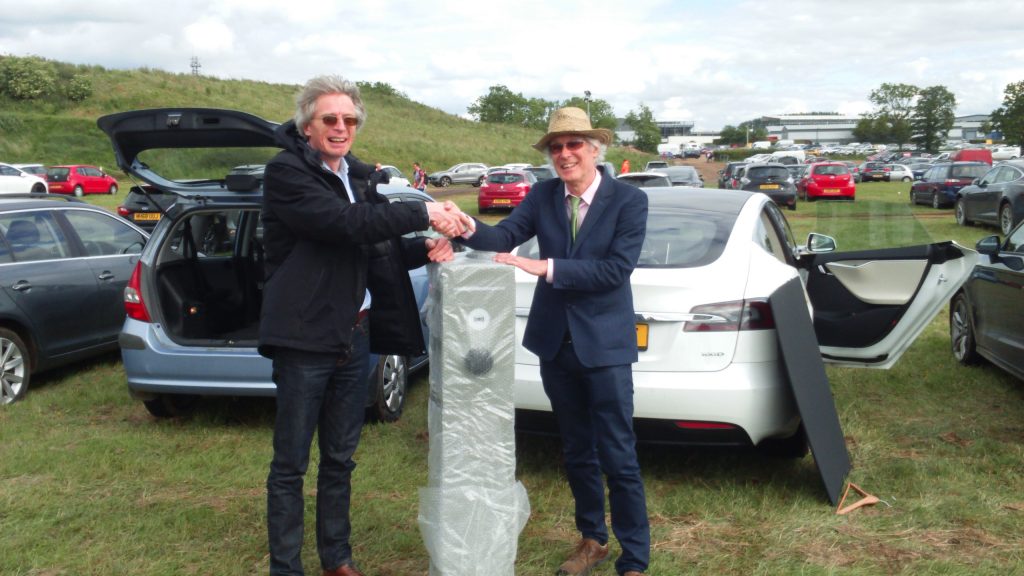
A little later Robin and I exchanged a ceremonial handshake in the muddy field that passes for a car park at the Silverstone Circuit in Northamptonshire:

Having transferred the charging station from the back of Robin’s Tesla Model S into the rear of our humble Honda Jazz, it has now made its way safely to the courtyard here at V2G Towers in (currently!) sunny SilicInny Valley near Camelford in North Cornwall:

The next step is to provide it with some power!

Standards Based V2x Charging Station Technology

We have been asked to elucidate on the nature of the work we will undertake following our successful bid for Department for Transport funding. Whilst we await ministerial sign off on the associated press release please note the following items of information. The title of the project is:

Vehicle to Grid Controller with Modular Communications

Our tagline above mentions:

Standards based V2x charging station technology

Here is an infographic based on a slide from the “International V2G Standards” presentation I gave at the International Energy Agency’s (IEA for short) Hybrid and Electric Vehicles (HEV for short) Technology Collaboration Programme (TCP for short) Wireless Charging and V2X Experts’ Workshop held at the Newcastle University Business School on March 20th 2018:

Infographic: Kasia Turajczyk

Our current funding does not cover the development of any power electronics.

Hopefully that is of some help?