The Largest Single Site for V2G in the World?

There have been numerous mainstream and social media articles today about what is claimed to be “The largest single site for vehicle-to-grid in the world”. Let’s start with the press release from SSE Enterprise:

A North London bus garage is set to become the world’s largest vehicle-to-grid (V2G) trial site.

Northumberland Park will run as a ‘virtual power station’ as part of the Bus2Grid project being led by SSE Enterprise, and generate electricity from buses when they are not in use.
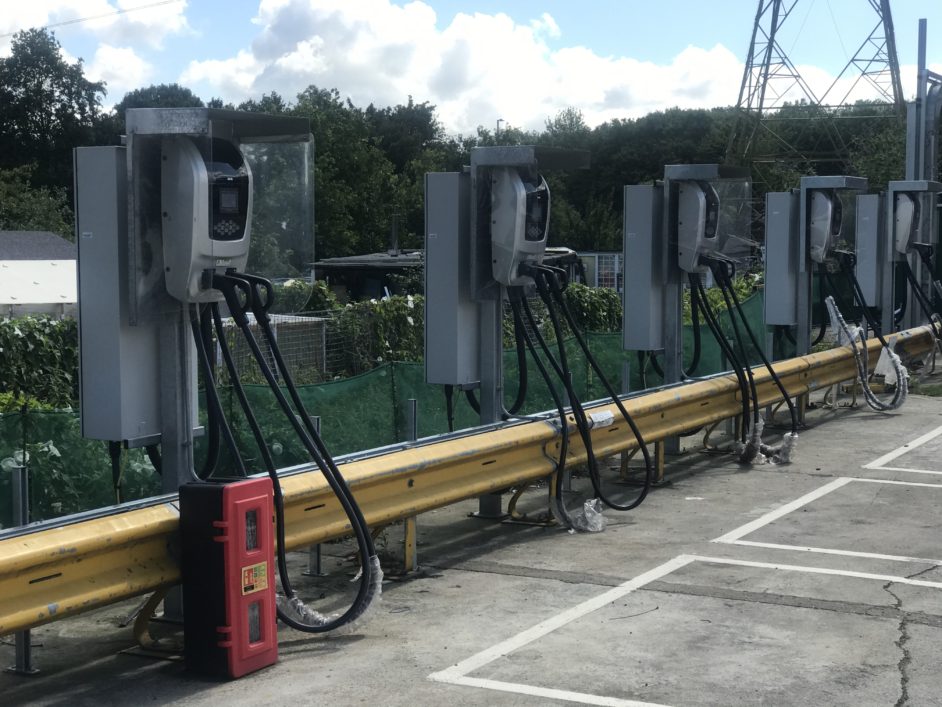
Charge points installed at Northumberland Park. Image: SSE Enterprises.

According to SSE Enterprise’s Smart Systems Innovation Sector Director, Niall Riddell:

Central to the challenge of decarbonising our transport and achieving climate change targets is how we can optimise the existing flexibility within the energy system. Developing a charging infrastructure that operates in two directions so that batteries can give back as well as take from the grid is an important part of this.”

V2G technology enables energy stored in an electric vehicle’s battery to be fed back into the electricity network.

By recharging when demand is low and putting energy into the grid when it is high, V2G helps manage the peaks and troughs, balance the network and make it more efficient.

If the entire London bus fleet of around 9,000 vehicles were to be converted with the technology being used in the Bus2Grid project, it could theoretically provide enough energy to supply more than 150,000 homes.

Next let’s see what an article in Current News has to say about the Bus2Grid project:

The world’s largest vehicle-to-grid (V2G) project has been launched at a north London bus garage.

Nearly 100 new zero-emission electric buses will be run from the Northumberland Park garage, which has been transformed with chargers that will be used for the Bus2Grid project.

Initially, it will use batteries from 28 of the state-of-the-art double decker buses to trial V2G systems, which are capable of returning 1.1MW energy to the grid to provide balancing services. The buses are adapted BYD ADL Enviro400EV, double deckers, each with a 382kWh BYD lithium iron phosphate batteries.
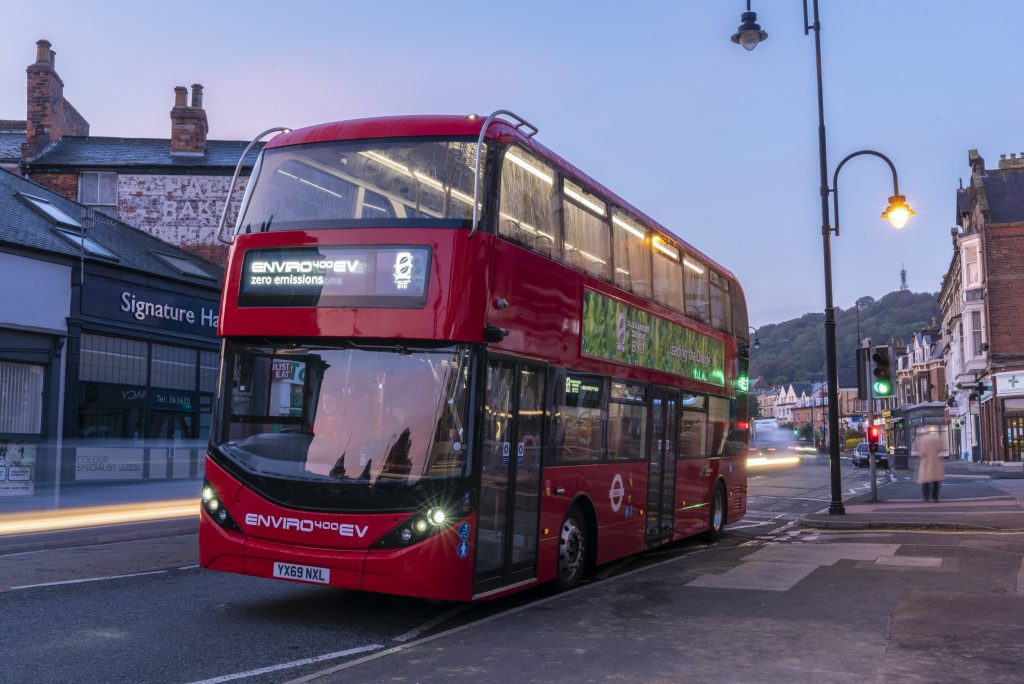
Image: Alexander Dennis Limited

Exciting news obviously, but is this really “the world’s largest vehicle-to-grid (V2G) trial site”?

Commenting on Niall Ridell’s LinkedIn article about the Bus2Grid announcement Francesco Lamberti from Engie eps begged to differ!

Extremely interesting! Nevertheless, the largest single site V2G project in the world should still be the one developed by ENGIE Eps and FCA in Turin with a size of 2 MW:

Is there any advance on 2 MW? As a matter of fact there is. As announced on our V2G Group sister web site last September, Triodos Bank are the proud possessors of a car park equipped with around 4 MW worth of bi-directional electric vehicle charging stations under a large solar PV canopy:
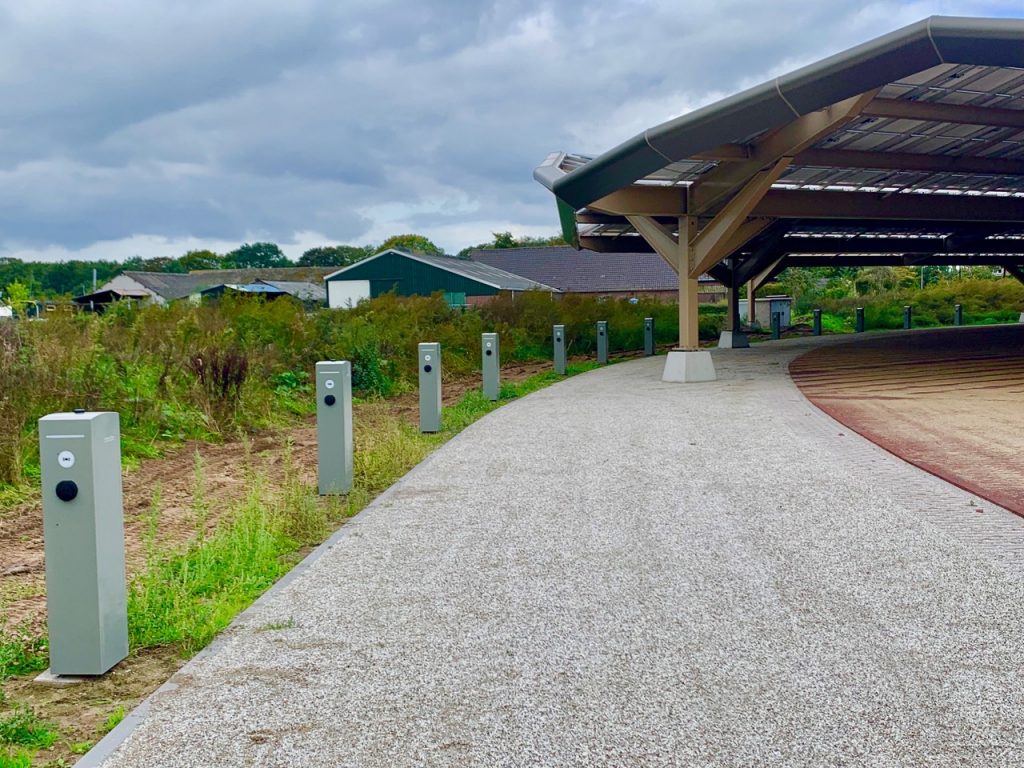
Strictly speaking the serried ranks of dual 22 kW charging posts currently employ vehicle-to-building (V2B) technology, in so far as they are connected to Triodos Bank’s new office building rather than directly to the local distribution grid.

Do you suppose SSE and/or Engie’s copywriters would care to do their due diligence on such technical subtleties before writing their next “V2G” headline?

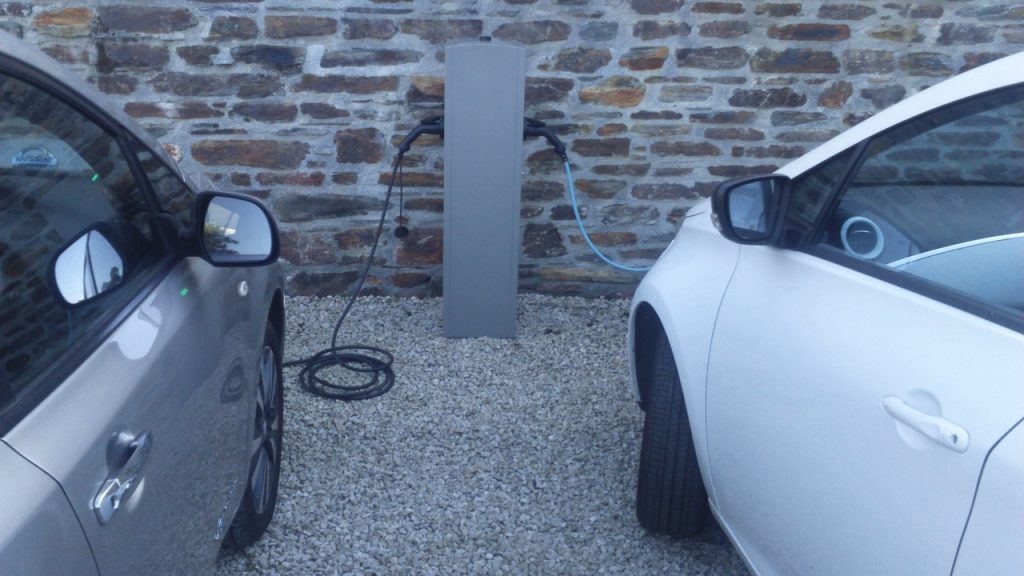
Should any such copywriters by any chance be watching, here is a rather more modest installation of an identical charging post in the V2G Group car park, much closer to the shores of the North Atlantic than the North Sea:


The 2019 Regen V2G Forum

I was up in London yesterday to attend the Regen “Electric vehicles and electricity system forum” on “Vehicle to Grid”. Not wanting to miss all of the excitement Kasia and Jim managed to make it to the “Networking and refreshments” afterwards as well. The 10th floor offices of our hosts for the afternoon, Burges Salmon, offered a spectacular view over the City of London:

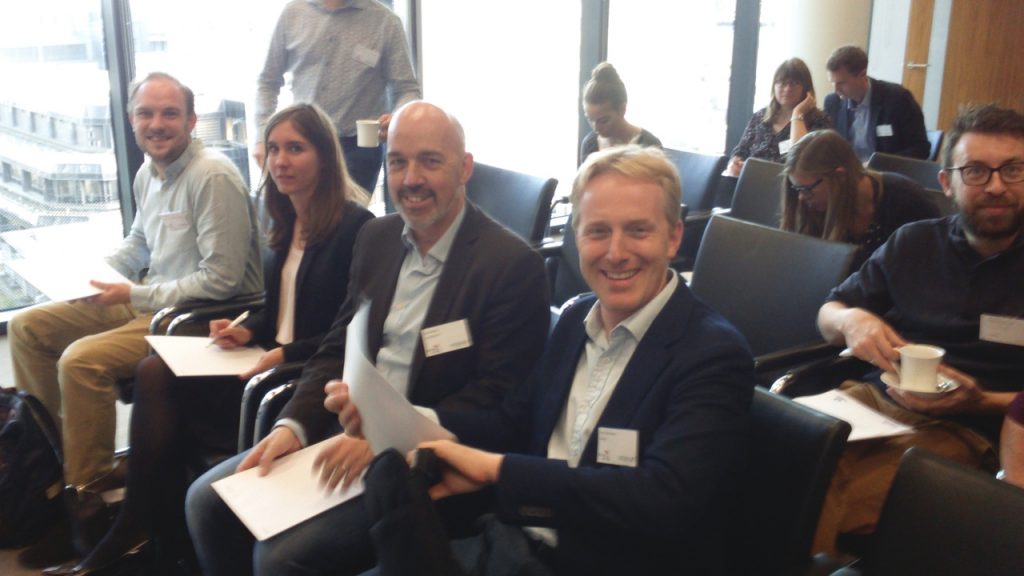
The event was introduced by Olly Frankland, Regen’s EV project manager, who opened his remarks by berating me for taking this candid snap of the panellists, plus one or two others!

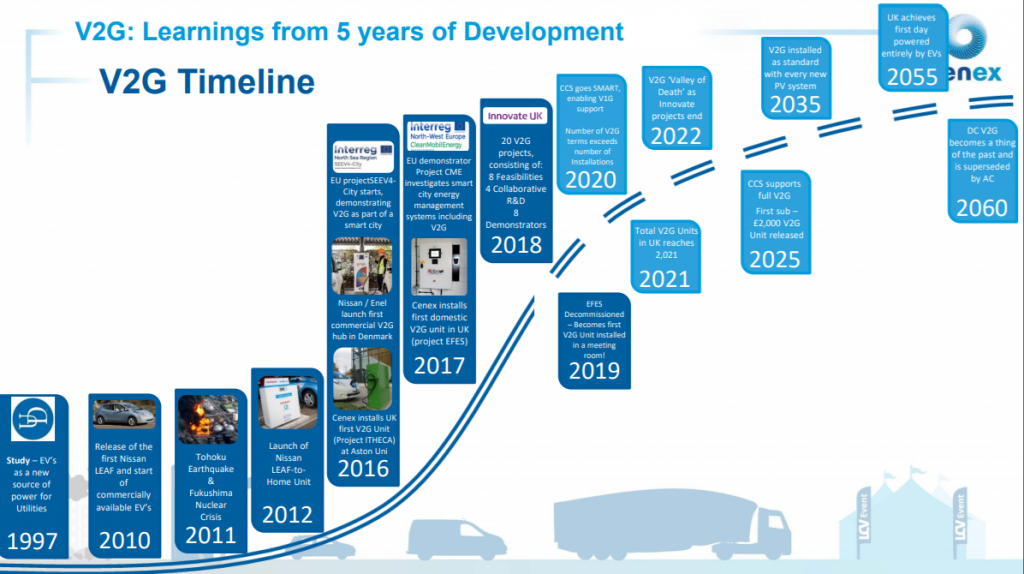
Next up at the lectern was Ross Fairley from Burges Salmon, followed by Chris Cox from Cenex, one of whose slides offered this “History of V2G”:

Note that one of Chris’s significant events is the launch of the “Nissan LEAF-to-home Unit” in 2012. I covered that news over on my V2G UK blog, and opined:

Nissan’s press release concludes by saying:

Nissan and Nichicon will continue to work together to create new value in EVs as part of the way forward toward the realization of a zero-emission society.

although they don’t forecast when such a society will be realized!

One question I had was subsequently addressed in the panel session. Olly asked the assembled experts “How many vehicle-to-grid capable EV charging stations are there in the UK at the moment, and how many will there be in 5 years time?”

The consensus amongst the panel members seemed to be:

  • 2019: 150-200
  • 2024: 5,000

A subject very dear to my heart was also discussed at some length by the panel, and what is more I wasn’t the one who posed the question! What are the pros and cons of AC versus DC vehicle-to-grid technologies, alternatively known in US English as “Vehicle Grid Integration” (VGI for short)?

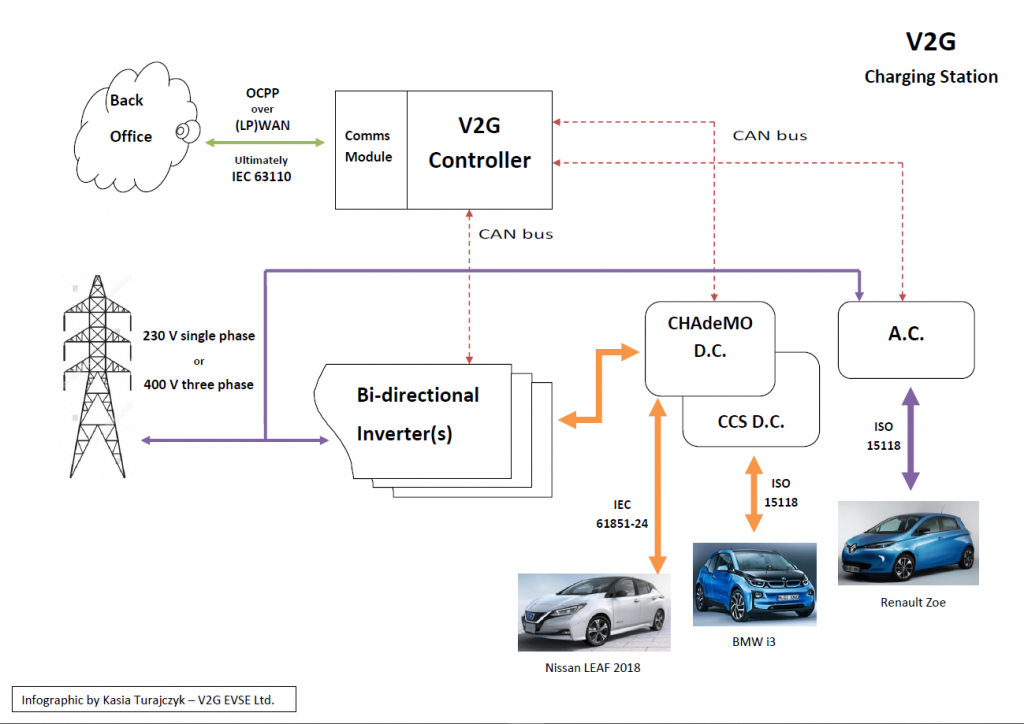
A slide that wasn’t in Olly or Chris’s deck is an infographic Kasia produced for my visit to Newcastle University last year for the International Energy Agency’s Hybrid and Electric Vehicles Technology Collaboration Programme V2x Experts’ Workshop, which I attended in my capacity as a member of assorted international “smart grid” standards setting committees. In the electric vehicle context notably ISO 15118 and IEC 63110:

Infographic: Kasia Turajczyk

That block diagram is obviously over simplified but hopefully makes it plain that an AC V2x charging station doesn’t include the bank of expensive “bi-directional inverters” required by a DC charger. Which does of course make AC charging stations much less expensive than the DC variety.

Hopefully that is if some help? The Regen V2G panel certainly seem to have been persuaded by that argument. Previously James Morgan who is a senior policy advisor in the Energy Team at the Office for Low Emission Vehicles had said he was attending the event with the aim of listening more than talking. He will have received the message that AC V2G is the future, and that in Europe at the very least, DC V2G via CHAdeMO is history.

In such circumstances I felt it was my loyal duty to HM Government to point out that (to the best of my knowledge) the UK’s first dual port bi-directional AC V2G capable charging post is installed in the V2G EVSE car park way down here in North Cornwall:

200 + 120 + 1  = ??k

For further information on our clever Cornish charging post please watch this video recording of a recent “We Drive Solar” AC V2G webinar until the bitter end:

Marc Mültin’s ISO 15118 “grid codes FAQ” that I refer to at 52:00 in the video can be found over on LinkedIn.

Department for Transport Invests in V2G EVSE

This morning the United Kingdom’s Department for Transport issued a press release which mentions us! It also mentions what is hopefully some very good news for other Great British small businesses too:

The Department for Transport (DfT) has today (6 August 2018) set out plans to level the playing field for small businesses bidding for government contracts.

In its SME Action Plan, the DfT has committed to directing a third of its procurement spending towards small and medium-sized enterprises by 2022.

As part of this pledge, the department has also awarded £700,000 in Transport Technology Research Innovation Grants (T-TRIG) to support innovative transport projects, including a universal train access ramp that would help disabled people board trains more easily across the network.

Transport minister Jo Johnson said:

Small and medium-sized businesses play a key role in this country’s economy and I am proud of our outstanding record in this area.

With this new action plan, we are leading by example by making it easier for these businesses to bid for contracts, and we will continue to support them over the coming years.

This year, out of 23 innovative transport projects given a share of £700,000, 14 were from small and medium-sized enterprises with fewer than 250 members of staff.

According to the Department for Transport’s aforementioned SME Action Plan:

This action plan outlines how the Department for Transport (DfT) will meet the Government’s aspiration of ensuring that 33% of all procurement spend will be with small and medium enterprises (SMEs) by the end of this Parliament, either directly or indirectly through the supply chain.

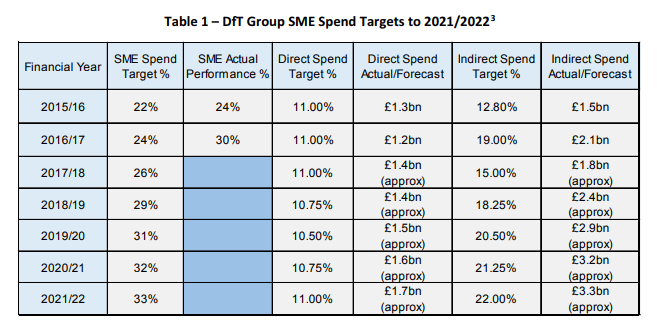
and here’s how the implementation of that plan is progressing:

2018-08-06_DfT_SME_Targets

Here at V2G EVSE we currently have far fewer than “250 members of staff”, and this is what the DfT had to say about our “Vehicle to grid controller with modular communications” project, seed funded by the Department for Transport in response to our “Transport Technology Research Innovation Grant Open Call” bid:

Developing a prototype for a vehicle to grid electric vehicle charging station controller, which will enable optimal charging across multiple vehicles, managing energy demand. This will include modular communications which will provide information to a central system.

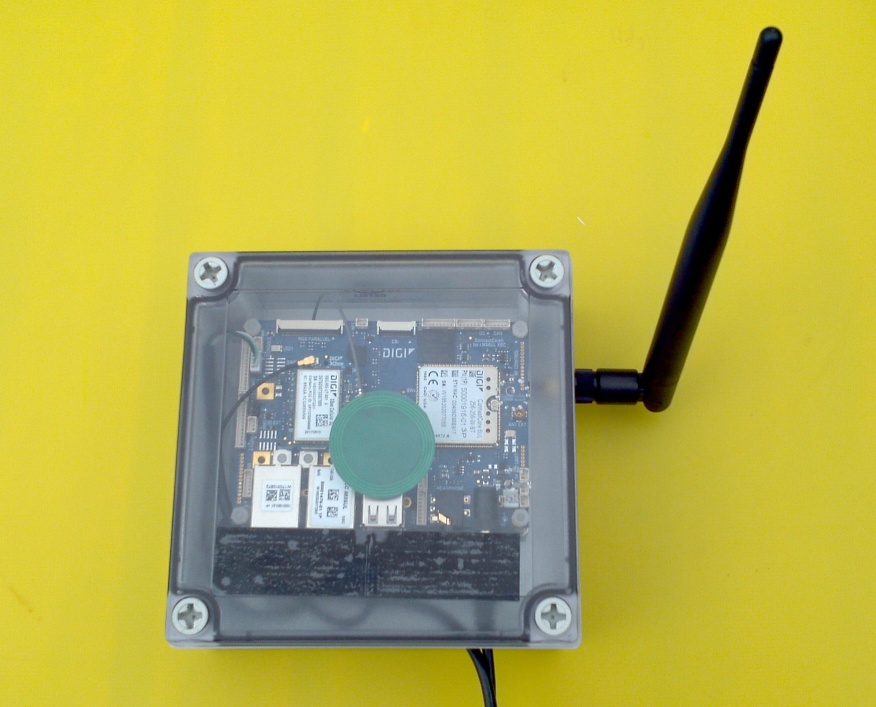
We were notified about our successful bid back in March, and a lot of progress has been made since then down here in North Cornwall! Here’s how the hardware side of our proof of concept EV charging station controller looks at the moment:

V2G-EVSE-Controller

With its assorted comms modules and their associated aerials it can currently communicate using Bluetooth “Low Energy”, WiFi, ZigBee, 2.5G, 3G, 4G, NB-IoT, LTE-M , “long range” WiFi, LoRa and Sigfox. Note first of all that not all of those technologies are suitable for the V2G use case. Note also that the V2x acronym covers a wide variety of ways of “improving the charging of electric vehicles” apart from just full blown vehicle-to-grid, including V1G (AKA “smart charging“), V2B (vehicle-to-building), V2H (vehicle-to-home) and V2I (vehicle-to-infrastructure).

From our perspective down here in sunny South West England the word “infrastructure” in the context of “electric vehicles” covers a range of Government departments. Electric vehicle charging stations definitely have one foot in the “transport” arena. In this day and age another one stands in the “energy systems” stadium as well. What’s more EV charging stations are not bipedal. Another foot is in the “digital” domain, and the fourth falls firmly in the “Future Cities” field.